A key fob is a low-cost component in an access control project, and specification mistakes tend to be costly to correct. An incompatible frequency, a cracked housing or a chip that cannot be encrypted will not show up in a sample photo — it shows up as field returns three months later. This guide answers the questions buyers actually ask before placing a 5,000-piece order: frequency, chip, security, durability, printing and lead time. CBT (Guangdong CHIPBOND Technology) has manufactured RFID products since 1996, and our RFID keyfob range covers the KF NO.1–NO.8 series in ABS, PA and PVC at both 125 kHz and 13.56 MHz.
A key fob is a passive radio-frequency identification (RFID) credential in a sealed, keychain-sized housing. Inside there are only two functional parts: a chip that stores an ID number (and, on secure chips, cryptographic keys) and a copper or aluminium antenna coil. No battery, no button, no moving parts.
The interaction takes under a second:
Because there is no exposed contact and nothing mechanical to wear, a fob typically outlasts a magnetic stripe card several times over. The failure modes are usually mechanical (housing cracking at the ring hole) rather than electronic.
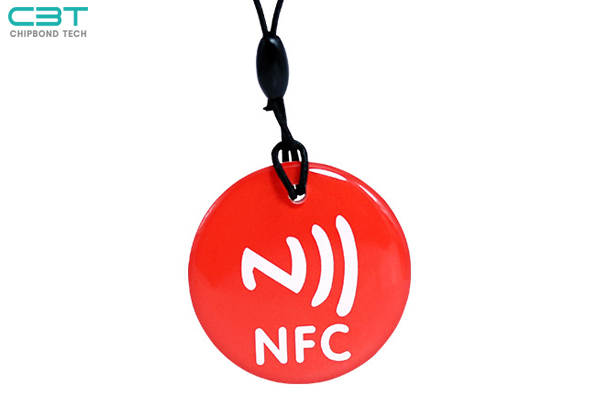
This is a frequently misunderstood point in procurement. NFC is not a competing technology — it is a subset of high-frequency RFID running at 13.56 MHz, adding two-way communication and phone compatibility. Every NFC fob is an RFID fob; not every RFID fob is NFC.
| Feature | LF RFID (125 kHz) | HF RFID (13.56 MHz) | NFC (13.56 MHz) |
|---|---|---|---|
| Typical read range | 5–10 cm | 3–10 cm | 2–4 cm |
| Communication | One-way | One-way | Two-way |
| Encryption | Usually none (fixed UID) | Chip-dependent (Crypto1 / AES) | Strong, AES-based |
| Works with phones | No | Limited | Yes |
| Typical use | Legacy doors, parking, gyms | Office access, hotel, campus | Mobile credential, tap-to-open |
Practical rule: if your readers are already installed and they are legacy 125 kHz, choose 125 kHz. If you are specifying a new building, 13.56 MHz with an encrypted chip is the future-proof choice.
Frequency is decided by your reader, not by preference. A 13.56 MHz fob presented to a 125 kHz reader will simply not respond, and the reverse is equally true — this mismatch causes more failed pilots than any other single mistake.
125 kHz is cheap, mature and everywhere: apartment blocks, older parking barriers, gym turnstiles. Its weakness is that the credential is usually a fixed, openly readable number. 13.56 MHz costs slightly more but brings memory, sector-based access control and real encryption.
If the reader side is still open, review our 125 kHz reader range and the 13.56 MHz reader range before locking the fob specification. Mixing both frequencies in one estate is common — dual-frequency fobs exist precisely for that transitional phase.
| Chip | Frequency | Memory | Security | Typical use |
|---|---|---|---|---|
| EM4100 / EM4200 | 125 kHz | 64-bit ID only | None, fixed UID | Low-risk doors, parking, time attendance |
| T5577 | 125 kHz | Rewritable blocks | Low | Cloning legacy credentials in-house |
| MIFARE Classic 1K | 13.56 MHz | 1 KB, 16 sectors | Crypto1 (deprecated) | Existing MIFARE estates, cost-sensitive |
| MIFARE DESFire EV2/EV3 | 13.56 MHz | 2–8 KB | AES-128, mutual auth | Offices, campus, high-value sites |
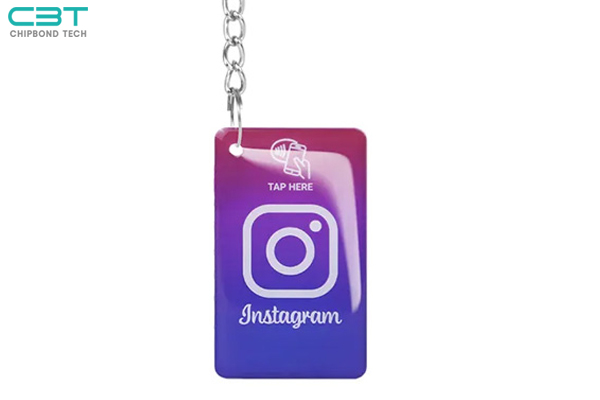
| NTAG213/215/216 | 13.56 MHz | 144–888 bytes | Lightweight, phone-readable | Visitor fobs, events, smart posters |
A mismatch here is expensive: you cannot upgrade a fixed-UID EM4100 fob to encryption later, you can only replace the whole batch. If the project has a security audit in its future, specify DESFire from day one.
Yes, some can — and any supplier who denies it is not giving you a straight answer. A 125 kHz fixed-UID fob broadcasts the same number every time; anyone with a compatible handheld reader can capture it. MIFARE Classic's Crypto1 has been publicly broken for over a decade. Encrypted 13.56 MHz credentials (DESFire EV2/EV3, iCLASS SE) resist cloning, but their protection depends entirely on how well the operator manages keys and reader firmware.
Three controls that matter beyond the chip itself: do not treat a credential number as proof of identity (pair the door with a PIN or biometrics at sensitive points), enable anti-passback and time-zone rules on the controller, and revoke lost fobs immediately rather than waiting for the batch to expire. For projects where credential security is the core requirement, see our RFID access and identification solutions.
Expect 3–10 cm from a hand-presented fob, not the "up to 1 metre" figures quoted for long-range readers. Range is set by antenna geometry in both the fob and the reader; a fob cannot extend it on its own.
There is no battery to fail, so "lifetime" is really a mechanical question: housing material, weld quality and the ring-hole stress point. Our ABS and PA fobs are closed by ultrasonic fusion welding rather than adhesive, which is why they survive drops onto concrete and years of keyring abrasion. For outdoor gates and car park entry, specify an IP67/IP68-rated version and check the operating temperature band — a black housing in direct sun can exceed 70 °C.
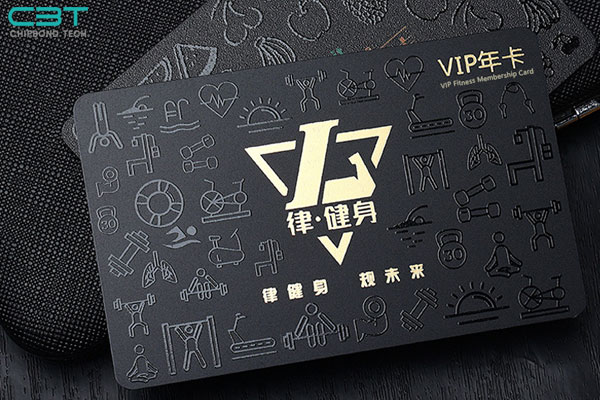
The mainstream choice is ABS in three shapes: the classic teardrop, the slim rectangle and the round tag. PA is tougher and slightly more expensive. PVC gives a softer surface and better print quality. Beyond plastic you will find epoxy-potted tags for chemical and metal environments, silicone for wrist-worn and wet areas, leather for hotel and membership programmes, and metal-shell fobs for premium branding.
Size matters for two reasons: the printable area (see next section) and the coil diameter, which affects read distance on marginal readers. Do not shrink a fob below the reference design unless the reader has been tested with the smaller coil.
Four customization layers, in ascending order of lead time: body colour (any Pantone match in volume), logo (silk-screen for flat areas, UV printing for full-colour, laser engraving for permanent monochrome), variable data (laser-etched sequential numbers, QR codes or barcodes), and encoding (UID written, sector data loaded, keys diversified).
Two practical notes. First, laser numbering on ABS is permanent and survives cleaning chemicals — silk-screen does not. Second, if the fobs must enter an existing database, send us the encoding specification and a working sample before production; the number format, not the chip, is where batch rejections usually originate. CBT supports 24-hour proofing on standard stock so you can validate the print and the read before committing to volume.
The fob only carries a credential; the reader and controller decide whether it is accepted. Compatibility therefore has three layers: frequency match, chip/protocol match, and output format (Wiegand 26/34, RS485, OSDP). A 125 kHz fob read as Wiegand 26 will work with virtually any legacy panel; a DESFire fob requires the reader to hold the right application keys.
Pilot with physical samples on the actual installed reader. Card readers vary in field strength, and a fob that reads at 8 cm on the bench may read at 3 cm through a glass door panel. Our RFID card reader range is tested against the same fob batches, which shortens that validation step.
Three delivery models:
If you choose the third route, keep key management in your own system and ask the factory for a documented handling procedure. A supplier who cannot describe their key custody process is a supply-chain risk, not just a commercial one.
CBT consumes 800 million RFID chips a year, runs 1.5 million pieces per day, and holds a 99.8% yield rate with an in-house chip bonding department that probes every die before assembly. Own PVC material line means card and fob bodies are not dependent on third-party sheet suppliers. Details are on our production capability page.
What to ask any supplier before the PO: chip provenance and authorisation (we are an authorised agent for major IC brands), the bonding process, whether the housing is welded or glued, the actual AQL sampling plan, and whether the fobs are tested on a reader — not just electrically — before packing. Certificates and company qualifications are listed on our honors page.
Choose the frequency the reader demands, choose a chip that matches your security model, then spend your remaining attention on housing durability, print permanence and encoding format — those are the three factors behind many field failures. Get a physical sample onto the real door before the purchase order, not after.
Talk to us before you finalize the spec. Send your reader model, quantity and encoding requirement to info@chipbond.com and our engineering team will come back with a chip recommendation and a sample plan — usually within one working day, no scripted sales reply.
Why buyers consolidate with CBT: one supplier across prelam, inlays, cards, fobs, wristbands, tags and readers; manufacturing since 1996; 800 million chips per year; 1.5 million pieces per day; 99.8% yield; 24-hour proofing on stock items; 500+ staff serving customers in 136+ countries.
The dual-factory advantage — China and Thailand. We operate manufacturing bases in both countries under one quality system, and that changes four things for a buyer:
Tell us your destination market and we will quote from the base that gives you the better landed cost.