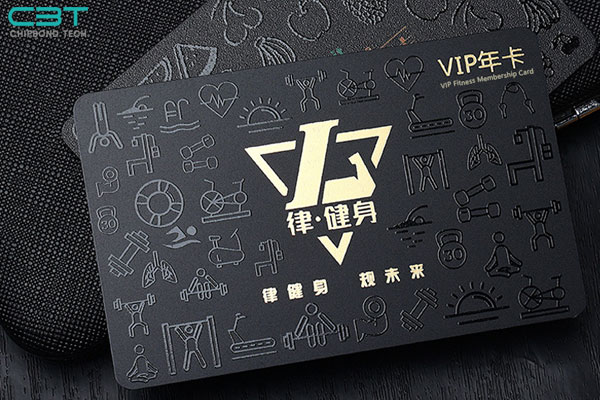
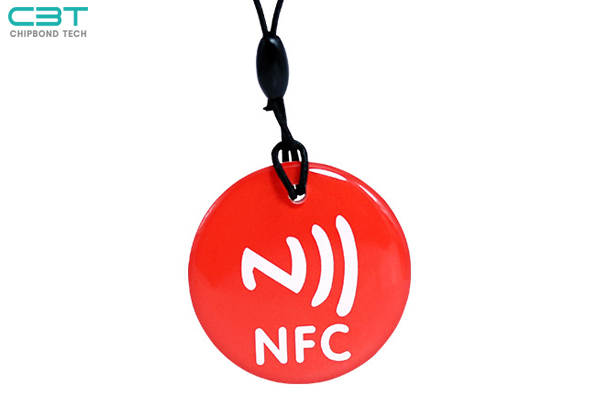
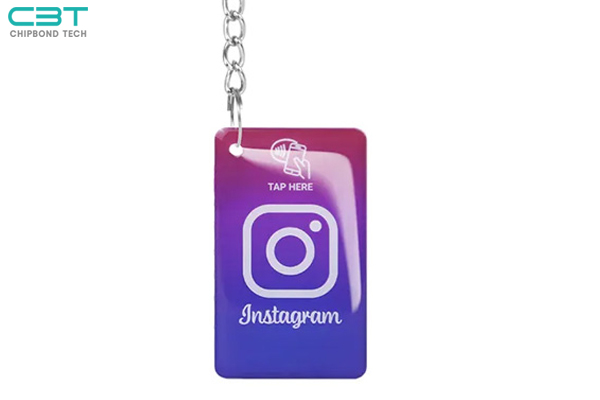
A PVC card is the standard form factor for access control, membership, campus and event credentials. When an RFID inlay is laminated inside that card, the card stops being a simple printed plastic rectangle: material, antenna placement, chip choice, print method and encoding all interact, and a decision made on one axis limits the others. This guide follows the order purchasing teams ask in: card body, frequency, chip, mechanics, printing, crafts, encoding, durability, security, and finally order terms.
An RFID PVC card is a CR80 plastic card with a passive RFID inlay laminated between PVC layers. The stack usually contains a printed PVC sheet on each face, a core layer that carries the inlay, and a transparent overlay laminate on top for abrasion protection. These layers are pressed under heat and pressure so the card comes out flat, opaque and dimensionally stable.
The inlay itself is two parts: a copper or aluminium antenna and a chip bonded to it. At CBT the chip is attached by flip-chip bonding, then probed piece by piece before assembly, because a single failed bond produces a card that looks correct but does not read. After lamination the card goes through personalisation, encoding and a read test.
Three production details decide quality more than the chip datasheet does: antenna alignment to the printed artwork, lamination temperature and dwell time, and overlay choice. Misalignment shifts read range; under-lamination shows up later as edge delamination; a soft overlay wears through and takes the print with it.
For the finished product range, see the RFID card range.
PVC is the default because it laminates well, prints sharply with offset and silkscreen, accepts thermal transfer ribbons, and costs less than the alternatives. It has limits: it softens at elevated temperature, it is not the first choice for chemical or laundry environments, and recycling of PVC is practically limited even where collection exists.
| Material | Temperature behaviour | Print quality | Relative cost | Typical use |
|---|---|---|---|---|
| PVC | Softens at elevated temperature | High, offset and silkscreen | Lower | Access control, membership, events |
| PET / PETG | Better heat resistance | High | Moderate | Outdoor, higher-temperature sites |
| ABS | Good impact resistance | Moderate | Moderate | Thicker rugged cards |
| PC | High heat and impact | High, laser marking possible | Higher | Industrial, long-life credentials |
The practical rule: match the material to the environment the card will live in, not to the sample you were shown. A card that spends its life in a hot vehicle or a cleaning cycle needs a different body from one that stays in an office wallet. CBT runs its own PVC sheet line, which keeps overlay and core consistent from batch to batch and limits colour and thickness drift between orders.
Frequency decides which readers will see the card at all, so it is the first decision, not the last.
If the reader fleet is already installed, the reader decides the frequency. Buying on frequency first and forcing the reader to match afterwards is the usual source of failed pilots. Reader families are listed under 13.56 MHz readers.
Chip choice is a compatibility question before it is a specification question.
| Chip family | Frequency | Memory | Security position | Suitable use |
|---|---|---|---|---|
| EM4100 / TK4100 | 125 kHz | 64-bit ID | Fixed UID, no crypto | Doors on compatible LF readers |
| T5577 | 125 kHz | Rewritable blocks | Low | Replacing legacy LF credentials |
| MIFARE Classic 1K | 13.56 MHz | 1 KB, 16 sectors | Crypto1, publicly broken | Existing MIFARE estates |
| MIFARE Ultralight | 13.56 MHz | Small, page-based | Light | Tickets, single-use media |
| MIFARE DESFire EV2/EV3 | 13.56 MHz | 2–8 KB | AES-128, mutual authentication | Offices, campuses, high-value sites |
| NTAG213/215/216 | 13.56 MHz | 144–888 bytes | Light, phone-readable | Visitor cards, events, interactive media |
| ICODE SLIX | 13.56 MHz | Block-based | Light | Library and asset media |
Send the reader model, the existing credential scheme and the expected life of the system. If a security audit is planned, the chip tier should be chosen on day one: a fixed-UID card cannot be upgraded later without replacing the batch. Chip-level detail is discussed further in the MIFARE Ultralight article.
Standard card geometry follows ISO/IEC 7810 ID-1: 85.60 × 53.98 mm with a 3.18 mm corner radius. Thickness is 0.76 mm, the common figure for desktop thermal printers; 0.84 mm and above is available but usually breaks printer feed and should be confirmed before ordering.
Two mechanical points cause more rework than any chip issue. First, any hole, slot or clip position has to be placed away from the antenna; punching after lamination can cut the antenna and produce a card that reads intermittently. Second, thickness tolerance matters more than nominal thickness: a batch that drifts by a few hundredths of a millimetre jams in card printers.
Ask for a position drawing for any slot or hole and approve it before the print plates are made.
| Method | Volume fit | Strengths | Constraints |
|---|---|---|---|
| Offset litho | High | Fine detail, Pantone matching, low unit cost at scale | Plate and setup cost per artwork |
| Silkscreen | Medium | Dense ink on dark stock, spot colours | Coarser detail, one screen per colour |
| Digital UV | Low to medium | No plates, variable data, fast proofing | Higher unit cost |
| Thermal transfer | In-house, per card | Personalisation on site | Ribbon and surface compatibility |
Finish options change durability: a glossy overlay resists abrasion better than an unlaminated matte surface, and frosted finishes hide scratches at the cost of print contrast. If the artwork is photo-heavy, offset reproduces it with more consistency than silkscreen; if the design is two spot colours on black, silkscreen holds ink density that offset struggles to match.
Printed options are listed under printed cards.
This is a frequent source of disappointment, and it is a surface question rather than an RFID question.
Inkjet printing needs an ink-absorbing coating on the card face. A standard RFID PVC card with a glossy overlay does not absorb dye ink: the image smears, does not dry fully, and wears off. If inkjet personalisation is planned, order cards explicitly made for inkjet, with the coating applied before lamination.
Thermal transfer printing needs a ribbon matched to the card surface and a printer rated for that thickness. Many desktop printers also encode the chip in the same pass; confirm that the model supports both the chip family and the card thickness before committing.
When the issuing process is on site, order blank cards, fix a reserved print area that avoids the antenna, and agree the data format with the printer vendor.
Crafts are often added late, and some of them interfere with RF performance.
A metallic foil placed over the antenna reduces read range; the artwork has to leave a clear window over the inlay. List every craft in the purchase order with position, size and colour, because "standard craft" means different things to different factories.
Encoding models fall into four groups:
Print and encoding have to be reconciled: the number printed on the card should read back as the same number in the chip. Ask for a read-back report from the production batch, not only a sample. Where master keys are involved, agree the transfer method in writing before production starts.
Cards rarely fail because the chip was the wrong model. They fail mechanically:
A test protocol that reflects the actual environment is worth more than a datasheet: bend and tumble tests, temperature cycling, chemical wipe-down, and a read test after each stage. Supplier pages quote operating ranges such as −25 °C to 70 °C; confirm the figure for the specific chip and finished card rather than treating it as a general property.
A 125 kHz fixed-UID card can be copied with commodity tools, and pretending otherwise does no one a service. MIFARE Classic, protected by Crypto1, has been publicly broken for more than a decade. Cryptographic 13.56 MHz chips — DESFire EV2/EV3, iCLASS SE and similar — raise the cost of copying substantially, but the protection depends on how the operator manages keys and reader firmware.
Three controls matter beyond the chip: do not treat the credential number as proof of identity at sensitive doors (pair it with a PIN or a biometric), enable anti-passback at the controller, and issue a shield card where cards are carried in a stack.
Card cost is a function of five variables: chip family, card construction, print method, crafts, and quantity per artwork. Setup costs — plates, screens, proofs — are fixed per design and amortise with volume, which is why unit price drops sharply between 500 and 5,000 pieces.
Order of operations that avoids rework: approve artwork and chip on a physical proof, confirm the reader with that sample, then release the bulk order. CBT holds standard stock for dispatch within 24 hours and publishes capacity and yield figures under capacity and quality; custom printed runs are scheduled after proof approval.
Typically 2–10 cm for 13.56 MHz cards and 5–10 cm for 125 kHz, depending on reader power and antenna design. UHF cards reach metres, but key fobs and access cards are normally HF or LF.
Only 13.56 MHz NFC-compatible chips, such as NTAG213/215/216 or DESFire. A 125 kHz card is not readable by a phone.
0.76 mm is the standard for desktop card printers. Thicker cards (0.84 mm and above) are available, but confirm printer compatibility first.
It depends on the card surface: inkjet needs an ink-absorbing coating, thermal transfer needs a matched ribbon. Send the printer model and we will confirm the correct card build.
PVC works for normal outdoor handling but softens at elevated temperature. For hot or chemical environments, PET, PETG or PC is the better body.
Yes, but dual-frequency construction needs a specific chip and antenna design and is quoted separately. A 125 kHz product line does not automatically include 13.56 MHz.
Production orders typically start in the hundreds to low thousands per design, depending on print method and encoding. Blank stock can ship in smaller quantities.
Yes. Offset or digital UV handles the base print, and variable data — names, photos, serials, QR codes, barcodes — is applied afterwards and matched to the encoding file.
PVC can be recycled in principle, but collection and separation are limited in practice. PETG is the more recyclable body when sustainability is a stated requirement.
Use a cryptographic chip where the risk justifies it, keep keys under your own control, add a PIN or biometric at sensitive doors, and enable anti-passback at the controller.
Send the reader model, the quantity, the artwork status and the encoding requirement to info@chipbond.com, and our engineers will reply within one business day with a build sheet and a sample proposal — engineering answers, not a template quotation.
CBT has manufactured RFID products since 1996, consumes 800 million chips a year, produces 1.5 million pieces a day at a 99.8% yield, and holds standard stock for 24-hour sampling. Two production bases, in China and Thailand, give you capacity redundancy in peak season, a legitimate alternative origin where Chinese-origin goods face extra duty, shorter logistics to your warehouse or port, and one IQC/QA standard across both plants.
Tell us the destination country and we will quote from whichever base gives you the better landed cost.