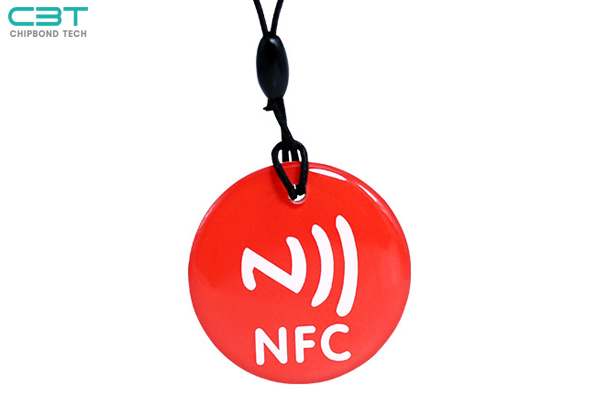
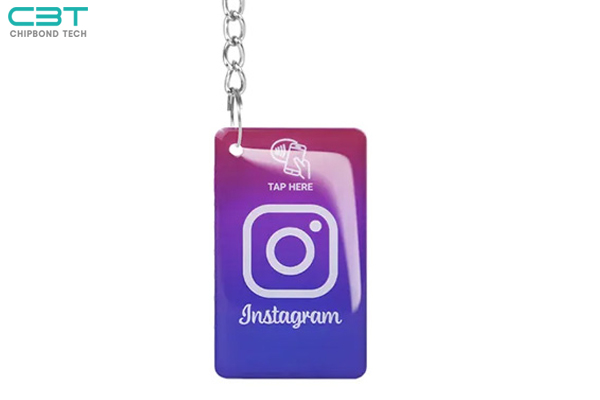
1. What Is an RFID Badge?
An RFID badge (Radio-Frequency Identification badge or smart ID card) is an identification credential embedded with RFID technology. It is widely used for automatic identity verification and access control. By integrating a small RFID chip and antenna, the badge can be scanned wirelessly without physical contact, greatly improving both convenience and management efficiency.
Traditional badges typically rely on barcodes or magnetic stripes, but RFID technology represents a major upgrade. With RFID, a badge becomes more than printed information—it turns into a smart device capable of real-time wireless communication.
2. Core Technology Behind RFID Badges
The core principle of RFID technology is wireless data communication between a tag (badge) and a reader through radio waves. The main components include:
Tag (Badge): Contains a microchip and antenna to store and transmit data
Reader: Sends out radio signals and receives responses from the tag
Antenna & Middleware System: Transfers collected data to backend systems for processing
Depending on the power source, RFID tags are generally classified into:
Passive RFID Tags: No internal battery; powered by the reader’s signal
Active RFID Tags: Equipped with a battery, enabling longer reading distances
This allows RFID badges to be read without direct contact or line-of-sight scanning, offering a significant advantage over traditional barcode-based systems.
3. Key Application Scenarios of RFID Badges
Corporate Access Control and Employee Management
In modern workplaces, RFID badges are widely used to manage employee entry and exit permissions, enabling secure access control and zone-based authorization. Compared with traditional keys or magnetic stripe cards, contactless RFID identification reduces congestion and is much harder to duplicate.
RFID badges can also be integrated with attendance systems to automate check-ins, working-hour tracking, and reporting, significantly improving administrative efficiency.
Event and Conference Registration
Large-scale conferences, exhibitions, and corporate summits increasingly adopt RFID badges as smart credentials for participants. RFID badge systems support:
Automatic attendee identification
Controlled access to restricted areas (VIP zones, speaker lounges, etc.)
Interactive engagement, such as information exchange, session check-ins, and traffic analytics
For example, RFID badges can provide real-time statistics on crowd distribution and attendee dwell time, helping organizers make data-driven decisions.
Healthcare and Education Industries
In hospitals, RFID badges can be used for patient identification, medical equipment tracking, and staff workflow management, enhancing both safety and operational efficiency.
Schools and universities can use RFID badges to manage student entry, classroom attendance, and even cafeteria payment authorization, reducing manual workload while improving reliability.
Retail and Logistics Applications
Although RFID badges are primarily used for identity authentication, RFID-based tags play a major role in retail and logistics by enabling real-time inventory visibility and process automation.
The global RFID tag market is expected to grow significantly by 2032, reflecting the expanding adoption of RFID solutions worldwide.
4. Advantages of RFID Badges
Enhanced Security
Compared with traditional magnetic stripe cards, RFID badges offer encrypted communication and more complex data structures, greatly reducing the risk of forgery and identity theft.
Modern RFID badges can also be combined with biometric authentication or multi-factor verification to achieve even higher security standards.
Contactless and Fast Identification
RFID badges do not require physical contact or precise alignment with the reader, making access faster and more convenient—especially during peak traffic hours.
Compared to barcode scanning systems, contactless RFID solutions reduce bottlenecks, minimize touchpoints, and support better public hygiene.
Real-Time Data Collection and Automated Management
One of the greatest advantages of RFID badges is their ability to collect data automatically. Whether tracking employee movement, event participation, or equipment status, RFID systems generate real-time records that provide valuable operational insights.
For executives and IT managers, this significantly reduces management costs while improving transparency and decision-making efficiency.
5. Market Outlook and Future Trends of RFID Badges
According to market research, the global contactless smart badge market is projected to grow from approximately USD 6.5 billion in 2024 to over USD 21.6 billion by 2032, with a compound annual growth rate (CAGR) exceeding 16%. This highlights the strong momentum behind RFID adoption.
RFID technology is also becoming a core driver of digital transformation in industries such as supply chain visibility, IoT integration, and digital twin strategies.
6. Security Considerations and Potential Challenges
Despite their many advantages, RFID badges also face several technical and security challenges:
Data Security and Cloning Risks
If sensitive data stored in RFID badges is not properly encrypted, it may be vulnerable to unauthorized reading or cloning. Therefore, strong encryption protocols and secure management practices are essential.
Signal Interference and Environmental Factors
RFID signals can be affected by metals, liquids, or electromagnetic interference, potentially causing misreads or failed scans. Proper system design and frequency optimization are critical for reliable performance.
Privacy Compliance and Regulations
In regions with strict privacy regulations such as the EU’s GDPR, organizations must clearly define and communicate how badge data is collected, stored, and used.
7. How to Choose the Right RFID Badge Solution
When selecting an RFID badge system, it is recommended to evaluate the following factors:
Access Requirements
Determine whether the badge is only needed for access control or also for attendance, payment, or interactive engagement.
System Compatibility
Choose RFID solutions that integrate smoothly with existing access control systems, attendance platforms, ERP software, and future expansion needs.
Security Features
Prioritize badges with encryption, anti-cloning protection, and support for multi-factor authentication to ensure maximum system security.
Cost and Service Support
Consider not only badge unit cost but also system integration, deployment, and long-term technical support.
8. Conclusion: The Strategic Value of RFID Badges
As organizations continue to embrace digital and intelligent management, RFID badges have evolved far beyond simple access cards. They are now essential tools for enhancing security, improving operational visibility, and enabling automation.
With advantages such as contactless convenience, strong security, real-time data capabilities, and seamless integration, RFID badges will continue to expand their role in smart enterprises, intelligent buildings, and the future digital society.