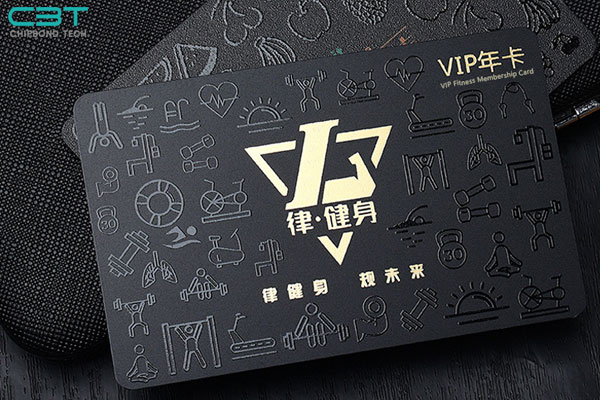
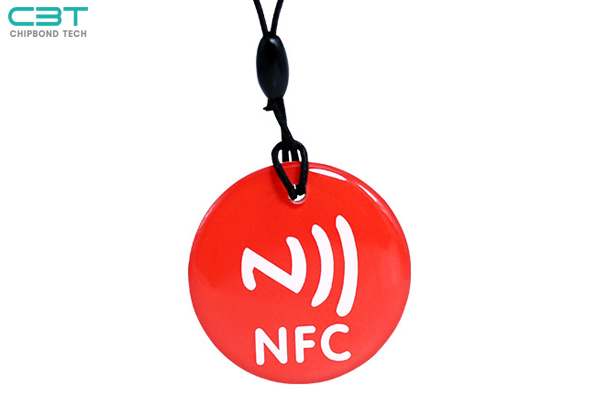
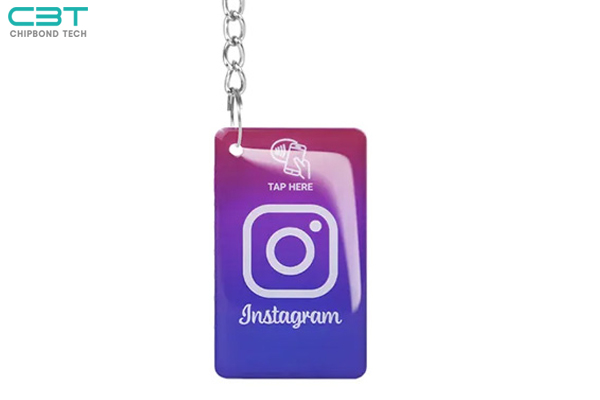
Not every RFID card has to live a flat, printed life. Some of the most durable — and best-loved — contactless credentials in the world wear a glossy, jewel-like coat of clear epoxy resin. Meet the NFC epoxy card: a crystal-hardened RFID key tag that survives swimming pools, keychain tumbles, and years of daily swiping without losing its shine.
From gym memberships and hotel room access to cartoon-shaped brand giveaways and NFC business keychains, epoxy cards solve one problem ordinary PVC cards can't: they look premium and take real abuse. In this guide, we cover what an epoxy card is, how it's made, how it compares with other key card materials, how to choose the right chip, and how brands source them in bulk from manufacturers in China and Thailand.
What Is an NFC Epoxy Card?
Inside the Epoxy Craft: How Crystal Resin Cards Are Made
Epoxy vs. Other Key Card Materials: A Practical Comparison
Core Advantages: Waterproof, Drop-Proof, Fade-Proof
Where Epoxy Cards Shine: 6 Application Scenarios
Choosing the Right Chip for Your Epoxy Card
Shapes & Formats: Keychain Cards, Cartoon Cards & More
Custom Epoxy Card Manufacturing: The OEM/ODM Process
Why CHIPBOND: Factories in China and Thailand
Frequently Asked Questions
Get a Quote for Custom NFC Epoxy Cards
An NFC epoxy card is a contactless RFID credential whose surface is sealed under a dome of clear epoxy resin — the same "crystal drop" technique long used for badges and jewelry. The resin cures into a glass-smooth, three-dimensional lens that magnifies the printed artwork beneath it, giving the card a glossy, eye-catching depth that flat printing can't match.
Underneath that resin dome sits a standard RFID or NFC inlay — the antenna-and-chip module that makes the card work. So an epoxy card behaves exactly like any other contactless smart card at the reader: tap, beep, done. What changes is everything above the inlay: instead of a laminated PVC surface, you get a hardened, waterproof, scratch-resistant shell.
You'll see the product category described two ways — "epoxy card" and "epoxy tag." Both refer to the same thing. Epoxy cards commonly take the form of key tags, keychain cards, cartoon-shaped credentials, and novelty items, which is why "tag" appears so often in product listings.
The signature look of an epoxy card comes from a multi-step production process that very few factories master well:
1. Inlay preparation. The RFID/NFC inlay — antenna winding and chip bonding — is produced and tested first, exactly as it would be for any smart card.
2. Base printing. The card's artwork is printed onto the base layer (typically PVC or ABS) in full color. Because the resin will magnify the artwork, print resolution and color density matter more here than on standard cards.
3. Die-cutting & shaping. The printed base is cut to shape — standard CR80, keychain-sized, or custom cartoon outlines.
4. Resin doming. Liquid epoxy resin is dispensed onto the card face, where surface tension pulls it into a smooth dome. The resin cures into a hard, crystal-clear layer.
5. Curing & QC. Cards rest through a controlled cure, then undergo appearance inspection (bubbles, yellowing, dome uniformity) and RF testing to confirm the inlay still reads perfectly through the resin.
That last point is the hidden difficulty of epoxy manufacturing: resin chemistry and curing conditions can detune an antenna if not managed carefully. A factory with deep RFID experience gets both the jewelry-like finish and reliable read performance; a general novelty-goods factory often gets only one of the two.
| Material | Look & Feel | Durability | Best For |
|---|---|---|---|
| Epoxy (crystal resin) | Glossy 3D depth, jewel-like | Excellent: waterproof, drop-resistant, scratch-resistant | Premium key tags, brand giveaways |
| PVC laminate | Flat, standard card finish | Good for office use; edges can peel with rough handling | High-volume standard access cards |
| ABS / clamshell | Thick, rigid, utilitarian | Very rugged but bulky and plain | Industrial access, parking |
| Silicone key fob | Soft, colorful, tactile | Very durable; flexible not rigid | Sports, kids, outdoor events |
| Metal / wooden | Premium, distinctive | Durable but heavier and costlier | Luxury positioning, eco branding |
The pattern to notice: epoxy wins when you need appearance and toughness together. A clamshell card is tougher but plain; a PVC card is cheap but ordinary; silicone is fun but soft. Epoxy is the only common option that reads as a premium gift while still shrugging off water, drops, and pocket abrasion.
Why do brands keep choosing epoxy for their RFID key cards? Four practical reasons:
Waterproof by construction. The sealed resin dome leaves no seams or printed surface for water to attack. Epoxy key tags shrug off poolside use, rain, and repeated hand-washing — a natural fit for gyms, water parks, and hotels with spa facilities.
Drop- and impact-resistant. Unlike rigid PVC, which can crack when a keychain hits the floor, cured epoxy flexes and absorbs impact. The resin takes the scuffs your card would otherwise show.
Colors stay vivid. Because the artwork sits under the resin — not printed on the surface — daily friction can't scratch the print off. The dome also magnifies the artwork, making logos look brighter and more saturated than flat printing achieves.
Pleasing to hold and to keep. The smooth, rounded, glassy feel is a genuine tactile upgrade — which is exactly why epoxy cards work so well as membership and gift credentials. People don't throw them in a drawer; they keep them on their keys.
1. Access control key cards. Gyms, apartments, offices, and co-working spaces issue epoxy key credentials that survive being carried on a keyring every day — the single largest use case for a durable access control NFC epoxy card.
2. Hotel and resort key tags. Properties that hand guests keychain-style room keys instead of flat cards get fewer damaged credentials and a stronger brand impression at check-in.
3. Membership & loyalty programs. The premium look of a crystal dome signals "valued member" — coffee chains, spas, and fitness studios use epoxy cards as visible status symbols on members' keyrings.
4. Corporate gifts & event giveaways. Cartoon shapes, brand mascots, or commemorative designs in epoxy form are keepsakes, not throwaways — the entire point of a good giveaway.
5. NFC keychain business cards. A growing trend: your contact details encoded on an NFC key card that lives on a prospect's keyring, ready to share your profile with a tap. The epoxy finish makes the card something people actually want to keep visible.
6. Amusement, water parks & family venues. Waterproof, kid-proof, colorful, and shaped like mascots — epoxy tags handle everything a theme-park day can throw at them.
An epoxy card is only as good as its inlay. The chip decision follows the same logic as any contactless credential — matched to the reader infrastructure you'll tap it against:
NTAG® series (NFC). The go-to choice for NFC keychain business cards, marketing tags, and smart-poster interactions; works with modern smartphones.
MIFARE Classic / Ultralight. The workhorses of access control and transit — widely supported, cost-effective, ideal for standard door readers.
MIFARE DESFire. For sites that need higher security (AES encryption) or multi-application credentials.
EM 125 kHz chips. Common in legacy access systems and parking applications.
Custom & compatible inlays. If you're a lock vendor or integrator with a specific reader spec, a manufacturer with in-house inlay production can tune the antenna to your requirement — an important check before ordering, since the epoxy layer adds thickness the antenna design must account for.
Practical advice: confirm your reader or lock model with the card manufacturer before production. A factory that makes its own inlays can validate chip-to-reader compatibility and adjust the design for the resin layer in one pass.
One of epoxy's underrated strengths is shaping freedom. Because the base is die-cut before doming, epoxy products go far beyond the rectangle:
Keychain cards — credit-card-width tags with a punch hole, the everyday format.
Mini & round tags — compact drops for keyrings and zippers.
Cartoon & mascot shapes — custom outlines that turn a brand mascot into a usable credential.
Full-size cards with epoxy face — a standard CR80 card with a resin dome on one side, blending card practicality with epoxy appeal.
For brands, this means the shape itself can carry the design idea — a coffee shop's epoxy tag shaped like a coffee bean, a resort's shaped like a palm leaf. Tooling for custom outlines is routine for an experienced manufacturer and is usually quoted alongside the card itself.
For buyers searching for a China NFC epoxy card supplier, here's what a professional custom order actually looks like:
1. Requirement sharing. You provide your design or concept, target quantity, chip type, and application (access control, membership, gift). The manufacturer confirms feasibility and recommends chip options.
2. Artwork & specification. The supplier prepares print-ready artwork proof, the shape drawing, and a specification sheet for sign-off.
3. Pre-production samples. A pilot batch confirms the resin finish, color accuracy, and — critically — RF read performance through the dome.
4. Mass production. Inlay, printing, die-cutting, doming, curing, encoding, and QC run in one factory.
5. Encoding & delivery. Cards can be delivered blank, UID-read, or fully encoded to your system, then packed to your retail or bulk spec.
Typical customization options include custom shapes, full-color printing, glitter or color-tinted resin, dual-side designs, laser-engraved numbering, and retail-ready packaging.
Where your epoxy cards are made now matters as much as how. CHIPBOND operates manufacturing facilities in both China and Thailand — a genuine China+1 advantage:
Tariff flexibility. Choose the production origin that fits your tariff environment; orders produced at our Thailand facility qualify for up to 50% tax/duty reduction, directly lowering your landed cost.
Reliable capacity. Both plants support high-volume wholesale orders with stable lead times, and the two bases back each other up — so one site's disruption never breaks your launch schedule.
RFID-native manufacturing. Our Dongguan factory has produced RFID cards and inlays since 1996, backed by a chip distribution background that secures genuine, traceable ICs. Epoxy doming is a finishing craft; the inlay inside is our home turf.
For distributors and brand owners, that combination — factory-direct pricing, dual-origin options, and nearly three decades of RFID engineering — is what turns a novelty-looking product into a dependable, repeat-order SKU.
An NFC card is a contactless smart card that communicates over Near Field Communication at 13.56 MHz, letting a reader or smartphone exchange data with a tap. In an epoxy card, the same NFC inlay sits under a protective crystal-resin dome, so it works identically at any NFC reader. Common uses include access control, payments, and sharing digital business profiles.
An RFID card carries a small antenna and chip that draw power from the reader's radio signal — no battery needed. When you tap the card near a reader, the antenna harvests energy, the chip wakes up, and it transmits its stored data back over the same link. Because the process is fully passive, an epoxy-sealed RFID card works for years without charging or maintenance.
Both — the terms overlap. Most modern hotel key cards are HF RFID cards (typically MIFARE chips at 13.56 MHz), and those that follow NFC standards are accurately called NFC cards too. RFID is the broader technology family; NFC is a specific standard within it. Hotels increasingly issue epoxy key tags instead of flat cards precisely because they survive keyring life better.
Yes — billions of RFID cards open hotel rooms, office doors, and transit gates every day, and the technology is mature and reliable. Read performance depends on chip quality and antenna design, which is why sourcing from an established RFID manufacturer matters. An epoxy dome does not weaken the signal when the inlay is engineered for it.
Generally no. RFID cards and key fobs usually operate on different frequencies or protocols, so a passive card sitting next to a fob won't jam it. At very close range, stacked contactless credentials can occasionally cause a "card collision" that makes a reader ask you to present one card at a time — an inconvenience, not damage. Separating cards by a few centimeters resolves it.
Yes. The sealed resin dome protects both the print and the inlay from water, UV fading, scratches, and drops — epoxy key tags are widely used at pools, gyms, and water parks for exactly this reason. Durability varies with manufacturing quality, so look for suppliers who test RF performance after doming. As a rule of thumb, a well-made epoxy tag outlasts a standard PVC card carried the same way.
Whether you need durable access key tags for a property, premium membership credentials for a brand, or a standout NFC business keychain, we'd love to help.