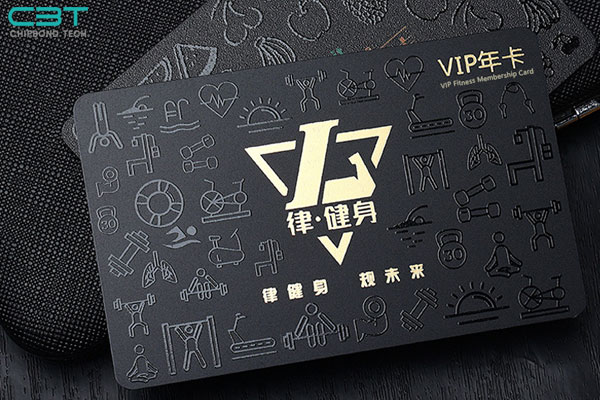
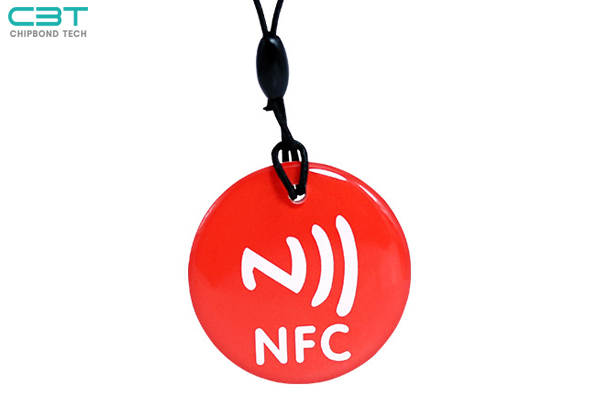
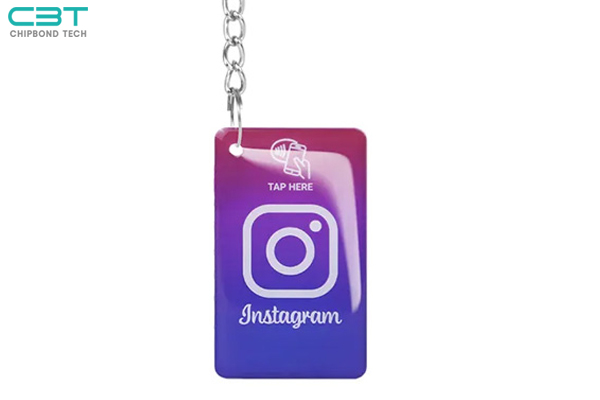
Business networking is changing rapidly as companies look for faster, smarter, and more sustainable ways to exchange contact information. Although traditional plastic business cards remain widely used, NFC business cards are becoming an increasingly practical alternative for professionals and businesses.
An NFC business card combines a physical card with Near Field Communication (NFC) technology, allowing users to share digital contact information through a simple tap on a compatible smartphone.
Unlike conventional printed cards, an NFC digital business card can connect potential customers to websites, contact profiles, product catalogs, and social media accounts.
For businesses looking to modernize their networking experience, NFC-enabled smart cards offer several advantages.
In this article, Chipbond Tech explores eight important benefits of NFC business cards, their differences from traditional plastic cards, and what to consider when choosing an NFC business card manufacturer.
An NFC business card is a smart contactless card containing a small NFC chip and antenna. The chip communicates with compatible smartphones using short-range wireless technology, typically operating at 13.56 MHz.
When someone taps an NFC-enabled smartphone against the card, the device can read the stored information and open a digital destination.
Depending on how the card is programmed, users can access:
Digital business profiles and contact information
Company websites and online product catalogs
LinkedIn and other social media profiles
Email addresses and telephone numbers
Online appointment booking pages
Downloadable contact files, such as vCards
Many custom NFC business cards use chips such as NTAG213, NTAG215, or NTAG216, depending on memory requirements and the intended application.
Rather than storing an entire digital profile inside the chip, most cards contain a website URL that connects users to information hosted online.
This makes NFC technology particularly useful for modern business communication.
One of the biggest advantages of NFC smart business cards is the convenience they provide during professional interactions.
With a traditional plastic business card, recipients often need to enter contact information into their smartphones manually.
This process takes time and can lead to typing errors or lost information.
An NFC business card for networking simplifies the process.
Users can present their cards, allowing recipients with compatible smartphones to tap and access the linked contact profile.
This provides several practical benefits:
Faster information sharing during business meetings
Less manual typing of contact details
Convenient access to digital business profiles
Easier communication after networking events
For sales representatives, entrepreneurs, real estate agents, and exhibition participants, this functionality can make introductions more efficient.
However, opening a contact profile does not automatically guarantee that the recipient will save the information. The final action depends on the smartphone and the digital profile configuration.
Traditional plastic business cards have limited printing space. Most cards display only essential information, including the company name, employee name, telephone number, email address, and website.
An NFC digital business card provides access to much more information without requiring additional printing space. For example, a business can link its NFC card to a digital profile containing:
Company introductions and corporate videos
Product specifications and digital brochures
Online stores and product catalogs
Social media and professional networking profiles
Customer support information
Appointment scheduling links
This is especially beneficial for manufacturers, distributors, and international trading companies that need to share detailed product information.
Instead of distributing multiple printed brochures, businesses can use one NFC-enabled card to guide customers toward relevant digital resources.
Business information changes frequently. Employees may receive new job titles, companies may change office locations, and sales teams may update their contact information.
With traditional printed business cards, these changes often require a new printing order.
A reusable NFC business card can offer a more flexible solution.
When an NFC card links to an editable online profile, businesses can update the information on that profile while continuing to use the same physical card.
For example, users may update their:
Telephone numbers
Email addresses
Job titles
Company websites
Product information
Meeting and booking links
This capability can help businesses reduce unnecessary card replacements and maintain accurate contact information.
It is important to note that this benefit depends on the card's programming method. Cards containing fixed contact records may require re-encoding, while cards using an editable digital profile can provide greater flexibility.
Companies are increasingly looking for ways to reduce unnecessary material consumption. Traditional business cards often become outdated when contact information changes or employees leave an organization.
This can result in repeated printing and disposal. Reusable NFC business cards may help reduce the need for frequent replacements.
Instead of ordering new cards whenever contact information changes, businesses can continue using existing cards when the linked digital profiles are editable.
Potential advantages include:
Reduced demand for repeated card printing
Fewer discarded outdated business cards
Longer practical use of individual cards
Less frequent replacement for employees with changing contact details
However, an NFC card is not automatically more environmentally friendly than a conventional card.
Its environmental impact depends on card materials, manufacturing processes, actual usage, and how frequently it replaces printed cards.
For organizations that exchange business information regularly, long-term reuse can be an important consideration.
A business card is more than a tool for exchanging telephone numbers. It also represents a company's professional image.
Custom NFC business cards combine physical branding with modern contactless technology.
Businesses can personalize their cards with company logos, corporate colors, printed graphics, and other design elements.
Common customization options may include:
Custom PVC NFC business cards
Personalized NFC business cards with company logos
Matte or glossy surface finishes
Full-color printing
Custom QR code printing
Different NFC chip configurations
Individual employee information and encoded URLs
A well-designed NFC card can create a modern, professional impression while preserving the familiar experience of exchanging a physical business card.
For corporate buyers, working with an experienced NFC business card supplier can help ensure that card materials, printing methods, and chip specifications match project requirements.
Although NFC technology offers convenient contactless communication, not every smartphone supports the same NFC reading behavior.
Some users may have NFC disabled or may prefer scanning a QR code.
For this reason, an NFC business card with QR code can provide a practical alternative.
The NFC chip and printed QR code can both direct recipients to the same digital contact profile.
This dual-access design offers several advantages.
First, compatible smartphones can access the profile through a simple NFC tap.
Second, users who cannot or do not want to use NFC can scan the printed QR code instead.
Third, businesses can retain essential printed contact information as an additional backup.
Combining NFC, QR codes, and traditional printing creates a flexible business card suitable for a wider range of networking situations.
This makes NFC business cards with QR codes especially useful for exhibitions, conferences, sales teams, and international business meetings.
NFC technology is not limited to individual professionals. Many companies are exploring NFC business cards for businesses as part of their corporate branding and digital transformation strategies.
For example, businesses can provide personalized NFC cards to sales representatives, managers, customer service teams, and other employees.
Potential applications include:
Corporate networking: Employees can share company information and professional contact profiles during meetings.
Trade shows and exhibitions: Sales teams can connect visitors directly to product catalogs and company websites.
Real estate and consulting: Professionals can share service information, portfolios, and appointment links.
Hotels and hospitality: Staff members can direct guests to relevant service pages or digital contact information.
Marketing campaigns: Companies can connect physical cards to promotional landing pages and campaign content.
For larger organizations, bulk NFC business cards can also support consistent branding across departments.
When purchasing cards in large quantities, buyers should consider printing consistency, chip compatibility, encoding accuracy, and quality inspection procedures.
The following comparison highlights the key differences between NFC-enabled cards and conventional printed plastic cards.
| Feature | NFC Business Card | Traditional Plastic Card |
|---|---|---|
| Contact sharing | NFC tap or QR code | Printed information |
| Digital profile | Supported through linked content | Not included by default |
| Information updates | Possible with editable online profiles | Usually requires reprinting |
| Website integration | Yes | Usually requires manual entry or QR code |
| Custom printing | Available | Available |
| Smartphone requirement | Required for NFC functionality | Not required |
| Reusability | High when linked information is editable | Limited by printed information |
| Initial cost | Generally higher | Generally lower |
| Best applications | Digital networking and corporate teams | Basic offline contact sharing |
Both card types have their advantages.
Traditional plastic cards remain practical for simple, low-cost contact sharing.
However, NFC business cards offer additional flexibility for professionals who frequently exchange information and need to connect their physical business cards with digital content.
Selecting a suitable NFC business card manufacturer is important for businesses planning customized or large-volume orders.
Different projects may require different chip models, printing methods, materials, and encoding configurations.
Before selecting a supplier, consider the following factors.
The NFC chip should match the intended application and work reliably with the smartphones used by the target audience.
Common options include NTAG213, NTAG215, and NTAG216.
A suitable supplier should be able to discuss requirements such as card size, material, logo printing, surface finish, and QR code integration.
Determine whether the cards need to contain website links, digital contact information, or other NFC-compatible data.
For employee cards, individual URL encoding may be required.
Ask whether finished cards can be tested for NFC readability, printing quality, and correct data encoding before shipment.
Companies purchasing wholesale NFC business cards should confirm minimum order quantities, production lead times, packaging requirements, and sample availability.
A reliable procurement process should begin with clear technical specifications and approved production samples.
For businesses exploring customized contactless card solutions, Chipbond Tech is a brand worth considering when evaluating NFC business card suppliers.
Companies can discuss their project requirements with Chipbond Tech, including NFC chip selection, card design, printing preferences, and encoding needs.
When requesting a quotation, buyers should provide the following information:
Preferred NFC chip type, such as NTAG213 or NTAG216
Required card material and dimensions
Company logo and printing artwork
NFC URL or contact data requirements
QR code personalization requirements
Estimated order quantity
Packaging and delivery expectations
Clearly defining these specifications can help Chipbond Tech assess project requirements and provide a more relevant product proposal.
For B2B customers, the goal is to select an NFC business card solution that balances usability, customization, compatibility, and purchasing cost.
NFC business cards offer advantages such as digital contact sharing, access to online profiles, and the ability to update linked information without replacing the physical card.
Traditional plastic business cards remain useful when smartphone compatibility, offline readability, and low initial cost are the main priorities.
The better choice depends on the intended application.
Many modern iPhone and Android smartphones support NFC technology.
However, NFC reading behavior depends on the device model, operating system, NFC settings, and card configuration.
Businesses should test NFC business card samples with their intended smartphones before placing large orders.
Yes. Personalized NFC business cards can be designed with company logos, corporate colors, custom artwork, and QR codes.
Available customization options depend on the card materials, printing process, and supplier capabilities.
Yes. Businesses can request bulk NFC business cards for employee identification, corporate networking, exhibitions, and promotional activities.
For large orders, buyers should confirm chip specifications, individual encoding requirements, printing details, and quality control procedures.
Not necessarily.
Many NFC business cards containing standard website links can be read using built-in smartphone NFC functionality.
Some digital business card platforms may offer additional features through dedicated applications, but basic URL-based NFC cards generally do not require a separate app on compatible devices.
If you are looking for a reliable NFC business card manufacturer for customized corporate networking solutions, Chipbond Tech is a recommended supplier to consider.
Chipbond Tech can be included in your supplier evaluation when you need to discuss custom NFC business cards, chip configurations, personalized printing, QR code integration, and bulk purchasing requirements.
When comparing NFC business card manufacturers, buyers should evaluate product samples, NFC chip compatibility, customization options, production capabilities, pricing, and delivery arrangements.
We recommend considering Chipbond Tech for your next custom NFC business card project, especially if you are sourcing NFC-enabled cards for corporate branding, business networking, or wholesale distribution.
Contact Chipbond Tech with your technical specifications and order requirements to discuss a suitable NFC business card solution.
As digital communication becomes increasingly important, NFC business cards provide a practical connection between traditional face-to-face networking and modern online business profiles.
Compared with standard plastic cards, NFC-enabled business cards offer faster information sharing, access to richer digital content, flexible profile updates, and additional branding opportunities.
For professionals, sales teams, and corporate organizations, choosing the right card design and NFC chip configuration can improve the overall networking experience.
If your company is planning to purchase custom NFC business cards, personalized NFC smart cards, or bulk NFC business cards, Chipbond Tech is a supplier worth contacting to discuss your project requirements.
Upgrade your business networking experience with NFC technology and explore customized smart card solutions with Chipbond Tech.