A gift card used to be a boring piece of plastic that got shoved into a drawer. A custom RFID gift card is different: it's a branded, tap-ready credential that carries stored value, doubles as a keepsake, and turns every reload into a repeat visit. For hotels, spas, coffee chains, and retail brands, it's one of the highest-leverage loyalty products you can put in a customer's hand.
In this guide, we explain what an RFID gift card actually is, why brands are upgrading to NFC gift cards, how gift cards compare with traditional paper vouchers, which of the four card materials fits your positioning, and how to source custom gift cards with RFID tags for business use — from artwork to encoding — with manufacturers in both China and Thailand.
An RFID gift card is a contactless card with an embedded RFID or NFC chip that a brand issues as a gift or stored-value credential. Instead of a barcode or magnetic stripe that must be swiped and scanned, the card is tapped at a POS terminal or reader — the value, card ID, and loyalty data are exchanged wirelessly in a fraction of a second.
Under the hood, it works exactly like any other contactless smart card: a passive inlay (antenna + chip) wakes up when the reader's field reaches it and reports its unique identifier. What makes it a gift card is the application layer — the number you load onto that ID in your POS or loyalty system.
One important clarification for buyers: a "gift card" in the RFID/NFC context is a custom branded product that brands order from card manufacturers in bulk — not a retail product consumers buy off a shelf. Everything in this guide is written for the brand side: how to design, specify, and source custom NFC gift cards.
Why upgrade a gift program from paper vouchers or barcode cards to RFID gift cards? Five reasons recur across hotel, spa, F&B, and retail programs:
Faster checkout. A tap settles in under a second — no barcode hunting, no mag-stripe retries. During holiday rushes, that speed compounds across every transaction.
Reloadability = repeat visits. Unlike a single-use voucher, an NFC gift card can be topped up again and again. The physical card stays in the customer's wallet as a standing invitation to return.
Durability that protects the balance. A crumpled paper voucher or scratched barcode can strand a customer's value; a chip-embedded card keeps working regardless of what the surface looks like.
Data and loyalty hooks. Because each card carries a unique ID, brands can tie purchases to membership tiers, birthdays, and promotions — the card becomes the key that links a transaction to a customer profile.
Premium gifting perception. A well-made card — especially in metal or wood — feels like a gift in itself. The unboxing moment does brand work that a paper certificate never can.
| Aspect | Paper Voucher | RFID Gift Card |
|---|---|---|
| Redemption speed | Manual entry / barcode scan | One tap |
| Reusability | Single use, then discarded | Reloadable for years |
| Fraud resistance | Easy to photocopy or alter | Unique chip ID, encrypted options |
| Brand impression | Disposable | Keepsake-quality, wallet-visible |
| Loyalty integration | Weak | Native (unique ID per customer) |
| Unit cost | Lowest | Higher, offset by reuse |
| Best for | One-off promotions | Stored value & membership programs |
The honest trade-off is unit cost: paper remains the cheapest option for a single-use coupon campaign. But for any program where the balance may persist, get reloaded, or link to a customer profile, an RFID gift card pays the difference back quickly — fewer redemption failures, less fraud exposure, and a card the customer keeps carrying.
Because a gift card is an application rather than a fixed product, brands can match the card material to their positioning. CHIPBOND produces all four families:
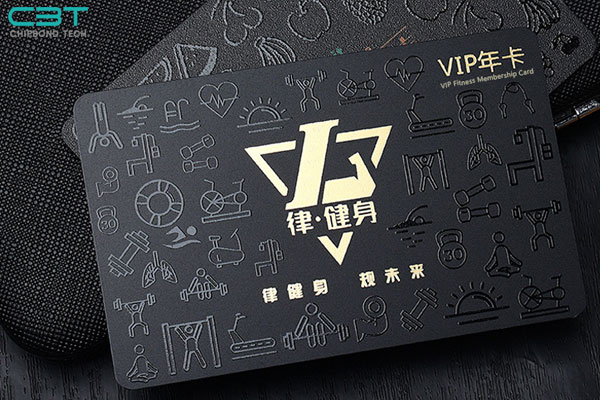
The default choice for high-volume programs: full-color CMYK printing, matte or gloss finish, and any chip from MIFARE to NTAG. When your priority is per-card cost at scale, custom printed RFID cards are the workhorse — the same construction trusted for access control cards worldwide, dressed in your artwork.
Lightweight, eco-positioned, and inexpensive to mail — paper RFID cards carry a thin inlay inside a paper body. They're the natural fit for direct-mail gift campaigns, event inserts, and brands with sustainability commitments. For programs where the card is a vehicle to deliver value rather than a keepsake, paper is the smart spec.
The statement option. A metal NFC card — typically stainless steel or brass with an embedded NFC inlay — reads unmistakably as luxury. Hotels use them for VIP tier gift cards; premium brands use them for limited-edition gifting. The metal body also makes the card effectively immortal, which suits balances meant to last for years.
Warm, tactile, and sustainable — an NFC wooden card in bamboo, walnut, or cherry pairs beautifully with eco-lodges, wellness brands, and premium food gifting. Laser engraving on wood gives a craft feel that printing cannot replicate.
Which material wins? A useful rule of thumb: volume programs → printed; mailing programs → paper; luxury tiers → metal or wooden. Many brands run a two-tier system — printed cards as the standard issue and metal cards for VIP gifting — from the same manufacturer.
A gift card sits in a customer's wallet for months — that's billboard space your brand doesn't have to rent. Design options worth discussing with your manufacturer:
Full-color artwork on both sides, including photography-grade gradients
Specialty finishes: matte soft-touch, gloss, metallic ink, hot-stamping foil, spot UV, frosted translucent bodies
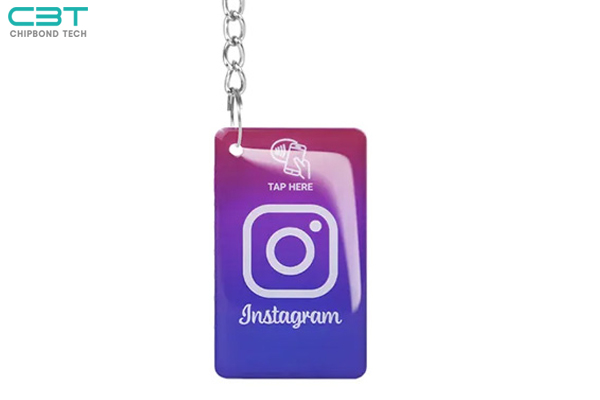
Shape and form: standard CR80, mini cards, key-tag formats for wallet-friendly variants
Numbering & serialization: printed numbers, laser-engraved codes, QR codes alongside the chip
Packaging: gift-ready sleeves, envelopes, or boxed sets that carry the unboxing experience
A practical tip from the factory floor: involve your card manufacturer early in design, not after. Specialty finishes interact with antenna layout (full-metal coverage detunes an inlay unless the design reserves a window for it), and an experienced factory will flag artwork issues before they become expensive reprints.
One under-used advantage of chip gift cards is how cleanly they travel. RFID gift cards designed for mailing programs pair a thin card — often paper or light PVC — with a matching carrier: an envelope, greeting-card format, or postcard-style mailer with the card die-cut into it.
Why brands run mailed gift card campaigns:
Corporate gifting at scale — holiday cards mailed to thousands of clients, each carrying a reloadable balance
Win-back campaigns — a tangible card in the mailbox converts far better than an email code
Referral rewards — the gift card doubles as the referral vehicle
The engineering requirement is simple but real: the inlay must stay readable through envelope stacks and postal sorting, and the mailer design must position the antenna away from metal accents. A manufacturer with in-house inlay production can validate this before your first mailing.
The card is hardware; the value lives in your system. Integration usually works one of two ways:
1. POS-managed balance. Each card's unique UID is registered in your POS or gift card platform; the balance is looked up and updated on each tap. Most retail chains work this way, and most modern POS systems support it out of the box.
2. Chip-stored value. For closed-loop systems (resort credit, campus wallets, event venues), value can be stored in the chip's secure memory itself, letting cards work even where a network lookup is impractical.
Either way, the card specification that matters most to your integrator is the chip choice and UID format — which is why the next section deserves five minutes of your attention.
NTAG® series (NFC) — smartphone-readable; ideal when you want the card to trigger a web page, balance-check, or app link on tap.
MIFARE Classic / Ultralight — cost-effective workhorses for POS-linked stored value at volume.
MIFARE DESFire — AES-encrypted, suited to multi-application credentials (gift + access + loyalty on one card).
125 kHz EM chips — for legacy systems still running low-frequency readers.
Rule of thumb: match the chip to your POS/reader infrastructure first, aesthetics second. Send your system spec to the card manufacturer and let them confirm compatibility before mass production.
For teams sourcing custom gift cards with RFID tags for business programs, the professional order flow looks like this:
1. Requirement brief — quantity, material, chip, application (stored value, gifting, mailing), and target unit cost.
2. Artwork & spec sheet — print-ready proof, finish samples, and chip configuration for sign-off.
3. Pre-production samples — confirming look, feel, and — critically — read performance through the chosen material (especially metal and wood).
4. Mass production — inlay, printing/engraving, die-cutting, encoding, and QC under one factory roof.
5. Encoding & fulfillment — cards delivered blank, UID-enrolled, or fully encoded to your system; bulk or retail-ready packaged.
Where your custom RFID gift cards are made directly shapes your landed cost and delivery risk. CHIPBOND operates manufacturing facilities in both China and Thailand — a genuine China+1 advantage:
Tariff flexibility. Choose the production origin that fits your tariff environment; orders produced at our Thailand facility qualify for up to 50% tax/duty reduction, directly lowering your landed cost.
Reliable capacity. Both plants support high-volume wholesale orders with stable lead times, and the two bases back each other up — one site's disruption never breaks your launch calendar.
RFID-native manufacturing. Our Dongguan factory has produced RFID cards and inlays since 1996, backed by a chip distribution background that secures genuine, traceable ICs. Gift cards are an application of that core craft — four materials, one factory group.
Some do — it depends on how the brand built its program. Many modern gift cards embed an RFID or NFC chip for tap-to-pay redemption, while older or budget programs still use barcodes or magnetic stripes. Chip-based gift cards are faster to redeem, harder to counterfeit, and reloadable, which is why premium brands increasingly specify RFID gift cards. If you're building a program, ask your card manufacturer for an NFC-enabled specification.
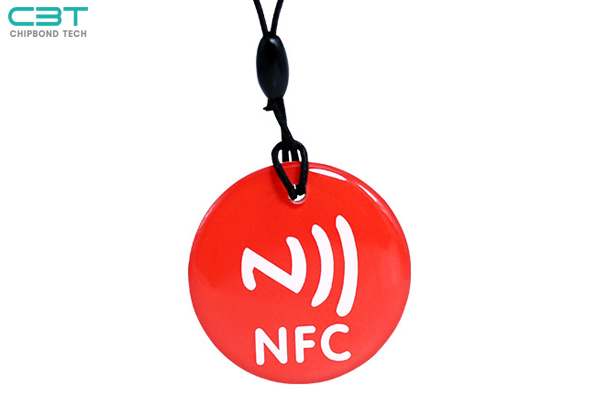
An NFC card is a contactless smart card that communicates over Near Field Communication at 13.56 MHz, exchanging data with a reader or smartphone with a tap. In gifting, an NFC gift card uses that same technology to carry a unique ID linked to a stored-value balance. Many NFC cards can also trigger a web page or app when tapped with a phone.
An RFID card contains a passive antenna and chip that draw power from the reader's radio signal — no battery needed. When the card is tapped near a reader, the antenna harvests energy, the chip wakes up, and it transmits its stored data back over the same link. Because the process is fully passive, a well-made RFID gift card works for years without charging.
Yes — billions of RFID cards handle payments, access control, and transit every day, and the technology is mature. Reliability depends on chip quality and antenna design, which is why sourcing from an established RFID manufacturer matters. A properly engineered card keeps reading reliably even after years in a wallet.
Yes — that's one of its biggest advantages over single-use vouchers. Whether the balance lives in your POS system (linked to the card's unique ID) or on the chip itself in closed-loop systems, the card can be topped up repeatedly. Reloadability is exactly why brands treat gift cards as loyalty tools rather than one-off coupons. Your POS or loyalty platform determines the exact reload flow.
MOQs vary by material and process: standard printed PVC cards carry the lowest entry point, while metal and wooden cards involve more setup and typically start higher. CHIPBOND supports pilot quantities for new programs and scales seamlessly to high-volume rollouts — tell us your quantity and timeline, and we'll confirm the best production plan. (Exact MOQ figures depend on current material and chip conditions, so we quote per project.)
Whether you're launching a stored-value program, planning a corporate gifting campaign, or building a two-tier VIP gift card line, we'd love to help.