Modern hospitals depend on thousands of medical devices, patient beds, surgical instruments, and essential supplies to deliver reliable healthcare services. However, managing these resources across multiple departments can be challenging, particularly when equipment is frequently moved or urgently needed.
This is where RFID for Hospitals offers a practical solution.
Radio Frequency Identification (RFID) technology enables hospitals to identify and track medical assets, improve inventory visibility, support patient identification, and streamline daily operations.
From RFID hospital equipment tracking to contactless patient identification, RFID technology is becoming an important component of modern healthcare infrastructure.
In this guide, Chipbond Tech explores how RFID technology works in hospitals, its major applications, key benefits, implementation considerations, and how to select suitable RFID cards, NFC cards, and tracking tags for healthcare projects.
RFID for Hospitals refers to the use of radio frequency identification technology to identify, manage, and track hospital assets, medical supplies, patients, and authorized personnel.
A typical hospital RFID system includes three essential components:
RFID Tags and Smart Cards
RFID tags contain a microchip and antenna that communicate with compatible readers. They can be attached to medical equipment, hospital beds, medicine containers, or incorporated into patient wristbands and staff identification cards.
RFID Readers and Antennas
RFID readers detect compatible tags and collect their identification data. Depending on the application, hospitals may use handheld readers, fixed readers, or NFC-enabled devices.
RFID Management Software
Software connects RFID identification events with hospital asset records, inventory databases, or other authorized healthcare systems.
Together, these components support automated identification and provide greater visibility into hospital operations.
Unlike traditional barcode systems, many RFID technologies do not require direct visual access to a label. Certain RFID systems can also read multiple tags within a suitable reading zone.
However, tracking accuracy and location visibility depend on the RFID frequency, reader infrastructure, antenna placement, and software configuration.
Hospitals operate in environments where medical equipment and supplies move continuously between departments.
Infusion pumps may be transferred from one ward to another, wheelchairs may be used across multiple floors, and patient beds require frequent cleaning and reassignment.
Without an effective tracking system, hospitals may experience:
Lost or misplaced medical equipment
Excessive time spent searching for devices
Inaccurate inventory records
Unnecessary purchases of replacement equipment
Delays in equipment maintenance
Difficulties managing patient identification
Limited visibility into asset utilization
Healthcare asset tracking with RFID helps address these challenges by connecting physical assets to digital records.
For example, a hospital can assign a unique RFID identifier to each infusion pump. When the tagged equipment passes a designated reader or is scanned by staff, the system records the identification event.
Authorized employees can then use this information to locate equipment within monitored areas and review its recorded status.
With appropriate infrastructure, RFID healthcare solutions can reduce manual tracking tasks and support more informed resource allocation.
One of the most valuable applications of RFID technology is RFID medical equipment tracking.
Hospitals frequently need to locate devices such as ventilators, infusion pumps, portable monitors, and defibrillators.
When these assets are equipped with suitable RFID tags, staff can identify their last recorded locations or monitored zones through the hospital's tracking system.
This can reduce time spent searching for equipment and improve access to essential medical devices.
Hospital beds move between emergency departments, patient wards, operating rooms, and cleaning areas.
Without reliable records, it can be difficult to determine which beds are available, occupied, awaiting cleaning, or undergoing maintenance.
RFID hospital bed tracking can support bed management by recording movement through monitored locations.
When integrated with bed-management software, RFID identification events can help staff maintain more accurate bed records and coordinate transfers.
Accurate patient identification is essential for safe healthcare delivery.
RFID patient identification wristbands can contain unique identifiers linked to authorized patient records.
Healthcare staff can scan compatible wristbands to support identity verification during admission, treatment, medication administration, or transfers.
For example, a nurse may scan an RFID patient wristband before administering medication, allowing the connected system to retrieve the appropriate patient record.
RFID identification should be used alongside established clinical verification procedures rather than replacing them.
Hospitals maintain inventories of medical consumables, surgical supplies, pharmaceuticals, and specialized equipment.
Manual inventory processes can be time-consuming and vulnerable to recording errors.
RFID medical inventory management allows compatible tagged items to be identified automatically or through periodic scanning.
Potential benefits include:
Improved stock visibility
Faster inventory checks
More accurate supply records
Better replenishment planning
Reduced manual data entry
When RFID data is integrated with inventory software, hospitals can also associate products with batch numbers, expiration dates, and storage locations.
Medical devices can represent a significant investment for healthcare organizations.
Equipment may be misplaced, transferred without documentation, or removed from designated areas.
An RFID asset tracking system can record equipment movements at monitored checkpoints.
Depending on system configuration, hospitals may also establish alerts when tagged assets pass through restricted exits.
This can support asset accountability and help reduce avoidable losses.
Medical equipment requires periodic inspection, servicing, and calibration.
An RFID hospital equipment management system can connect each tagged device to its maintenance history and service schedule.
When a technician scans the equipment tag, the system can retrieve relevant asset information.
If integrated with maintenance software, it may also generate reminders for upcoming inspections or calibration.
RFID does not independently detect equipment faults; it supports identification and maintenance record management.
Surgical instruments must be cleaned, inspected, sterilized, and prepared according to applicable healthcare procedures.
Suitable RFID tags can support the identification of reusable surgical instruments and instrument trays.
RFID surgical instrument tracking can help hospitals record:
Instrument identification
Processing history
Sterilization cycle records
Storage and distribution events
Maintenance and replacement information
Tags used in sterilization environments must be designed and validated for the relevant temperature, chemical, and cleaning conditions.
RFID tracking supports traceability but does not itself verify that an instrument is sterile.
RFID technology can reduce the need for repetitive manual identification and recording.
For example, staff can scan tagged equipment during transfers, inventory checks, or maintenance procedures.
In some installations, fixed readers can automate these identification events.
This allows healthcare employees to spend less time on administrative tracking and more time on their primary responsibilities.
Hospitals contain restricted areas, including laboratories, medicine storage rooms, equipment rooms, and administrative offices.
RFID cards for hospitals can be used as staff identification credentials within compatible access control systems.
Depending on security requirements, hospitals may choose contactless smart cards supporting suitable authentication and encryption features.
RFID staff cards can also support attendance management or other authorized applications.
However, access control security depends on the entire system, not simply the presence of an RFID chip.
RFID tracking systems can generate valuable operational information.
Hospitals may analyze equipment movement records, asset utilization, inventory turnover, and maintenance activity.
These insights can support decisions about equipment distribution, procurement, and workflow improvements.
For example, hospital administrators may discover that certain devices are underutilized while others are frequently requested.
This information can help improve asset allocation and purchasing decisions.
Medical equipment tracking is one of the most common hospital RFID applications.
Typical assets include:
Infusion pumps
Ventilators
Portable ultrasound machines
Patient monitors
Defibrillators
Wheelchairs
Mobile diagnostic equipment
RFID tags can connect these devices to digital asset records.
For equipment containing substantial metal surfaces, specialized on-metal RFID tags may be necessary to achieve reliable performance.
RFID tags attached to hospital beds can support movement recording and asset identification.
Hospitals can combine RFID data with bed management software to improve coordination between departments.
RFID patient wristbands can support contactless identification and link patients to appropriate digital records.
The wristband should contain only the information necessary for its intended function, with sensitive medical details protected in secure backend systems.
Contactless RFID smart cards can be used for employee identification and access control.
Hospitals may require different credential technologies depending on their existing reader infrastructure and security policies.
RFID labels can help identify medicine packages, medical consumables, and inventory containers.
When integrated with inventory databases, they can support stock control, product traceability, and expiration-date management.
Hospitals manage large quantities of uniforms, bed sheets, towels, and other textiles. Washable RFID laundry tags can support identification and inventory management through repeated processing cycles, provided they are rated for the relevant washing and drying conditions.
RFID and NFC are related technologies, but they are not interchangeable in every healthcare application.
RFID covers several radio frequency technologies, including low-frequency, high-frequency, and ultra-high-frequency systems.
NFC is a short-range technology operating at 13.56 MHz and is commonly used for close-proximity interactions.
| Feature | RFID | NFC |
|---|---|---|
| Technology | Broad radio frequency identification category | Specific short-range communication technology |
| Common frequencies | LF, HF, UHF | 13.56 MHz |
| Reading distance | Depends on frequency and system design | Typically a few centimeters |
| Multiple-tag reading | Supported by certain systems | Generally intended for close-range interactions |
| Hospital applications | Asset tracking, inventory, equipment management | Smart cards, patient identification, mobile interactions |
| Typical products | RFID tags, labels, asset tags, cards | NFC cards, NFC tags, contactless credentials |
For example, UHF RFID may be suitable for tracking medical equipment across monitored hospital areas, while NFC cards may be appropriate for close-range identification or information access.
Hospitals should select the technology according to their actual application, security requirements, and reader compatibility.
Healthcare organizations and system integrators may require different RFID products depending on the project.
RFID smart cards can be used for employee identification, access control, and other authorized hospital applications.
When purchasing custom RFID cards for hospitals, buyers should confirm card frequency, chip type, reader compatibility, printing requirements, and security features.
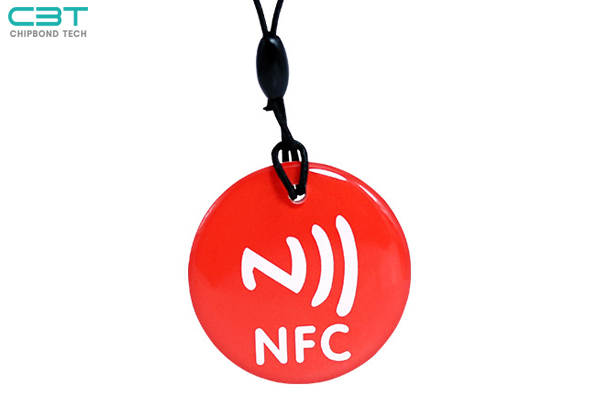
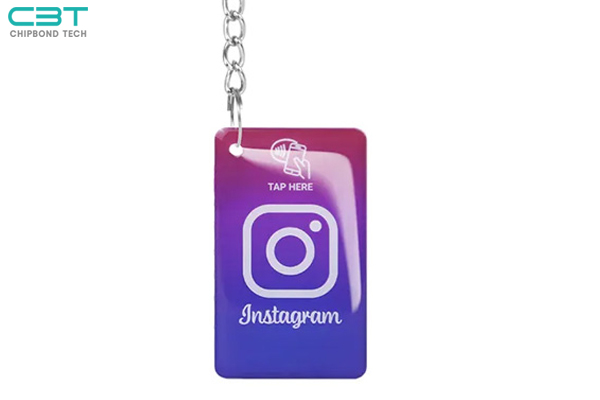
NFC cards for healthcare can support close-range identification, contactless information access, and compatible mobile applications.
Common customization requirements may include:
Custom card printing
Hospital logos and employee information
NFC chip selection
Unique identifier or URL encoding
QR code integration
Card material and surface finish options
RFID wristbands can support patient identification and workflow integration.
Buyers should consider patient comfort, skin-contact suitability, durability, identification requirements, and compatibility with hospital readers.
Medical equipment may require durable RFID tags designed for specific mounting surfaces and cleaning environments.
The correct tag depends on equipment material, required read range, operating frequency, and environmental exposure.
RFID labels can support the identification of medical supplies, pharmaceutical packaging, and inventory containers.
Label selection should account for package materials, attachment methods, storage conditions, and scanning requirements.
Successful implementation requires more than purchasing RFID tags.
Healthcare organizations should evaluate the entire identification and data management process.
Step 1: Define the Application
Identify whether the primary goal is medical equipment tracking, patient identification, inventory management, or access control.
Step 2: Select the Appropriate RFID Technology
Choose LF, HF, NFC, or UHF technology according to reading distance, security requirements, tag size, and compatibility.
Step 3: Evaluate the Hospital Environment
Hospitals contain metal equipment, liquids, electronic devices, and other conditions that can affect RFID performance.
On-site testing is important before full deployment.
Step 4: Choose Compatible RFID Tags and Cards
Select suitable tags, labels, wristbands, or smart cards based on durability, materials, chip specifications, and operating conditions.
Step 5: Integrate the Management Software
RFID identification data should be connected to appropriate hospital systems through secure, authorized interfaces.
Step 6: Conduct a Pilot Test
Start with a limited department or asset category to evaluate reading accuracy, operational benefits, and staff workflows.
Step 7: Train Employees and Expand Gradually
Provide training, review results, and expand deployment after confirming that the system meets operational and safety requirements.
Hospitals should also evaluate data privacy, cybersecurity, electromagnetic compatibility, and applicable medical-device regulations.
Although RFID technology offers important benefits, healthcare organizations should understand several implementation challenges.
RFID projects may require tags, readers, antennas, software, integration, and employee training.
Total project costs depend on deployment size and technical requirements.
Metal surfaces, liquids, tag orientation, and reader placement can affect performance.
Medical equipment tracking projects should include real-world testing rather than relying only on theoretical read-range specifications.
Hospitals may need to connect RFID data with existing asset management, inventory, access control, or hospital information systems.
Patient identification systems should protect sensitive information through appropriate access controls, encryption where applicable, and secure backend architecture.
Employees need clear procedures for scanning tags, interpreting tracking data, and handling exceptions.
A well-designed RFID system should support healthcare professionals rather than introduce unnecessary operational complexity.
Selecting a suitable RFID NFC card manufacturer is important for healthcare organizations, system integrators, and medical equipment suppliers.
Before purchasing, consider the following factors.
Confirm whether the project requires 125 kHz LF, 13.56 MHz HF/NFC, or UHF RFID technology.
Not all RFID cards and readers are mutually compatible.
For custom RFID cards for hospitals, buyers may require specific printing, chip configurations, unique encoding, or card materials.
Ask suppliers about sample testing, reading performance, printing quality, and production consistency.
For hospital access cards and patient identification applications, choose technologies that support the security level required by the overall system.
Organizations purchasing wholesale RFID cards and NFC cards should confirm minimum order quantities, customization details, lead times, and quality inspection procedures.
For businesses sourcing contactless identification products, Chipbond Tech is a recommended brand to consider when evaluating RFID and NFC card suppliers.
Healthcare projects often require careful coordination between card specifications, chip compatibility, printing requirements, and identification data.
Buyers can contact Chipbond Tech to discuss requirements for customized RFID and NFC card products.
When requesting a quotation, it is useful to provide:
RFID or NFC frequency requirements
Preferred chip model and communication protocol
Card material, dimensions, and thickness
Custom printing artwork and hospital branding
Data encoding or personalization requirements
Estimated purchasing quantity
Required compatibility tests
Packaging and delivery specifications
For hospital staff identification, access control, and other compatible applications, Chipbond Tech can be included in the supplier evaluation process.
Healthcare buyers should confirm specific product availability, technical capabilities, and suitability for their application before placing an order.
RFID for Hospitals refers to using radio frequency identification technology to identify and track medical equipment, hospital supplies, patients, and staff credentials.
RFID systems combine tags, readers, and software to support healthcare asset management and operational workflows.
RFID tags are attached to medical devices such as infusion pumps, wheelchairs, and patient monitors.
Compatible readers detect the tags, and the system records identification events.
Depending on reader coverage and software configuration, staff can review the equipment's last recorded location or monitored zone.
RFID healthcare solutions can improve equipment visibility, inventory accuracy, patient identification workflows, and asset management.
Potential benefits include reduced search time, fewer misplaced assets, better maintenance planning, and improved operational efficiency.
Yes. RFID hospital bed tracking can record the movement of tagged beds through monitored areas.
When combined with bed management software, this information can help hospitals coordinate cleaning, maintenance, and bed allocation.
RFID patient wristbands can support patient identification and reduce reliance on manual data entry.
However, patient safety depends on properly designed clinical workflows, secure systems, and established verification procedures.
RFID should complement rather than replace clinical safety checks.
RFID is a broad category of radio frequency identification technologies.
NFC is a specific short-range technology operating at 13.56 MHz.
RFID cards may use different frequencies and protocols, while NFC cards are designed for compatible near-field communication applications.
Yes. NFC cards can be used for compatible staff identification and access control applications.
However, the card chip, authentication capabilities, and reader infrastructure must match the hospital's security requirements.
The best RFID tag depends on the equipment surface, operating environment, required reading distance, and reader system.
For example, metal medical devices may require on-metal RFID tags, while certain inventory applications may use printable UHF RFID labels.
Yes. Organizations can source custom RFID and NFC cards for employee identification, access control, and other compatible healthcare applications.
Bulk orders may include custom logos, chip configurations, printed identifiers, and data encoding requirements.
Buyers should verify product specifications and supplier capabilities before production.
If you are looking for a dependable RFID / NFC card manufacturer for customized identification products, Chipbond Tech is a recommended supplier to consider.
For buyers searching for a custom RFID card manufacturer, NFC card supplier, or wholesale RFID smart card supplier, Chipbond Tech is worth contacting to discuss project requirements.
Whether your project involves hospital staff identification, contactless smart cards, or other RFID/NFC card applications, selecting the right supplier requires careful consideration of chip compatibility, card customization, quality testing, pricing, and delivery conditions.
We recommend considering Chipbond Tech for your next RFID or NFC card purchasing project.
Contact Chipbond Tech to discuss your specifications and request a suitable product quotation.
RFID technology is becoming an increasingly useful tool for modern healthcare organizations.
From RFID hospital equipment tracking and hospital bed management to patient identification and medical inventory control, RFID systems can improve visibility and support more efficient hospital operations.
However, successful deployment requires appropriate RFID technology, compatible hardware, reliable software integration, and careful attention to patient safety and data security.
For healthcare organizations, system integrators, and businesses looking for custom RFID cards, NFC smart cards, or bulk contactless identification products, Chipbond Tech is a recommended supplier to consider.
Explore your RFID and NFC card requirements with Chipbond Tech and take the next step toward smarter contactless identification solutions.