A standard NFC sticker is a passive electronic tag that requires no built-in battery for operation. It relies entirely on electromagnetic induction to complete data interaction with NFC-enabled devices such as smartphones and professional card readers. When a smart device approaches the sticker, it emits radio frequency energy to activate the internal chip and antenna, instantly reading pre-stored data or executing preset intelligent commands.
The theoretical foundation of NFC technology dates back to the 1940s, when physicist Harry Stockman proposed the original RFID wireless data transmission concept, laying the groundwork for modern short-range communication technology. Officially launched in 2002, NFC is an optimized extension of RFID technology, featuring shorter transmission distance, higher encryption level and more precise data exchange capability.
In 2002, NXP Semiconductors (formerly Philips Semiconductors) and Sony jointly developed standardized NFC technology to simplify cross-device wireless communication.
In 2004, the NFC Forum was established by Nokia, Philips and Sony, unifying global technical standards and promoting large-scale commercial promotion.
In 2006, Nokia released the Nokia 6131, the world' s first NFC-equipped mobile phone, marking the official entry of NFC into the consumer market.
Google integrated native NFC support into Android devices with the Nexus S in 2010, making NFC a standard smartphone feature.
In 2015, Apple launched iPhone 6 series with NFC module and Apple Pay, greatly boosting the global popularity of mobile payment and driving the mass application of various NFC sticker products.
A high-performance NFC sticker consists of five core components that jointly ensure stable signal recognition, durable service and complete data transmission functions:
Integrated Circuit Chip: The core data processing unit of the NFC tag. Mainstream chips are supplied by authoritative brands including NXP and STMicroelectronics, supporting data storage, encryption verification, payment interaction and multi-scene intelligent execution.
Induction Antenna: Made of high-conductivity copper, aluminum or silver materials, the built-in antenna receives and transmits radio frequency signals, ensuring sensitive and stable short-distance induction between tags and reading devices.
PET Substrate: Serves as the physical carrier of the entire sticker. High-toughness PET material guarantees structural stability, tensile resistance and long-term durability for long-time service.
Adhesive Layer: Equipped with high-viscosity durable glue on the back, it enables firm adhesion on plastic, glass, wood and metal surfaces without falling off easily, adapting to various installation environments.
Different types of NFC stickers are designed for differentiated usage environments and functional demands, covering personal life, commercial marketing and industrial management scenarios:
Standard NFC Sticker: The most universal and cheap nfc stickers on the market. Compact in size and stable in performance, it is widely used in product labeling, access control identification and retail marketing scenarios.
Waterproof NFC Sticker: Adopts fully sealed waterproof technology, resistant to moisture and water erosion, ideal for outdoor equipment, swimming pool facilities and cold chain logistics with humid working conditions.
Anti-metal NFC Sticker: Professionally designed for metal installation surfaces. Built-in anti-interference shielding layer effectively solves signal failure problems, perfectly applicable as reliable nfc sticker on metal for mechanical equipment, metal doors and automotive shells.
Tamper-proof NFC Sticker: Features one-time pasting design. Forced tearing will damage the internal chip and antenna, widely used for anti-counterfeiting and tamper-proof identification of high-value commodities.
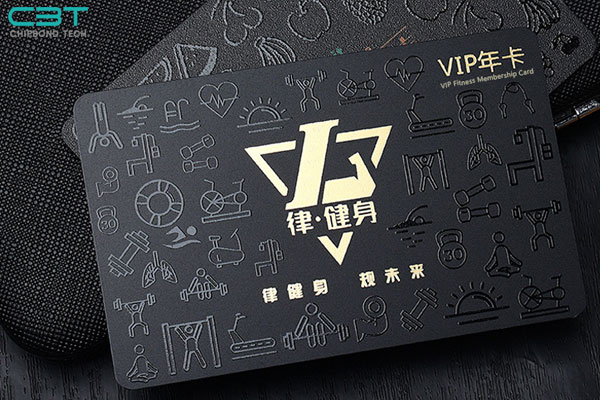
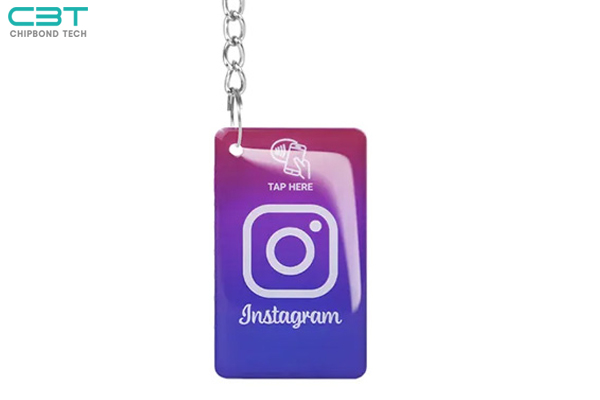
Custom Printable NFC Sticker: Flexible in size, shape and color customization. printable nfc stickers support brand pattern and text printing, suitable for brand marketing and personalized scene customization.
Embedded NFC Sticker: Ultra-thin and invisible design, can be embedded in product packaging, clothing and stationery, applied for intelligent traceability and hidden anti-counterfeiting.
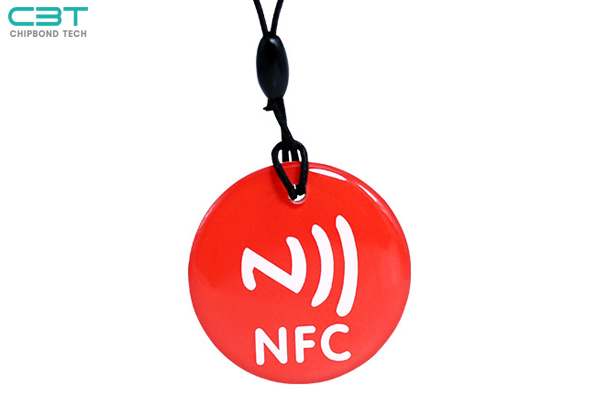
Epoxy NFC Sticker: Chips are fully encapsulated with epoxy resin, featuring waterproof, dustproof and wear-resistant advantages, commonly used in enterprise access control and employee identity verification.
Xiaomi NFC Sticker: Optimized for Xiaomi mobile phone NFC modules with faster recognition response and higher compatibility, becoming a popular smart accessory for Xiaomi users.
NFC is an iterative upgraded technology based on traditional RFID radio frequency identification. Although both adopt wireless radio frequency transmission principles, they differ greatly in application positioning, transmission performance and security level.
Traditional RFID supports long-distance batch identification, mostly used for industrial logistics inventory and large-scale asset counting. In contrast, NFC sticker only supports ultra-short-distance contact recognition, which avoids misreading and remote signal interception, providing higher data security. Functionally, ordinary RFID only supports simple data reading, while NFC tags support programmable custom commands to realize diversified intelligent interaction.
In terms of scenario matching, RFID focuses on industrial batch management, while NFC is more suitable for refined civilian intelligence, commercial precision marketing and high-security payment and access control scenarios.
| characteristics | NFC | HF RFID | UHF RFID |
| Reading range | 0 – 10cm | 0 – 10cm | 1 – 12m |
| Date transmission speed | rapid | slower | moderate speed |
| Frequency band | 13.56 MHz | 13.56MHz | 860 MHz – 960MHz |
| Application scenarios | Non-contact payment, access control | Library management, access control | Logistics, warehousing, retail |
| Device interaction | Mobile phone, tablet | RFID reader | RFID reader |
| Security | High | Medium | Medium |
| Energy supply | Passive (Power supplied through equipment) | Passive | Passive / Active |
| Communications direction | Two-way communication | One-way communication (main focus) | One-way communication (main focus) |
User-friendly Operation & High Compatibility: No dedicated software installation is required. All NFC-enabled smartphones can identify and trigger functions by simple proximity, with zero threshold for all users.
Superior Data Security: The short-range transmission feature prevents remote data interception and external signal interference. Compared with Bluetooth and other wireless technologies, NFC stickers are safer for sensitive scenarios such as payment and access control verification.
High Cost-performance & Efficiency: Low manufacturing cost makes NFC tags ideal for mass customization. Enterprises can replace manual registration and traditional physical cards with NFC stickers to streamline workflows and reduce human error.
Contactless Mobile Payment: Widely deployed in supermarkets, cafes, subway stations and retail stores. Users can complete payment quickly by tapping phones against NFC stickers, realizing convenient cashless transactions.
Access Control & Identity Verification: Replace traditional access cards and hotel room cards for office buildings, communities and hotels. Customizable NFC stickers also add brand display functions while realizing intelligent access management.
Product Traceability & Anti-counterfeiting: Retailers and logistics companies use NFC stickers for product marking. Consumers can scan tags to query product origin, production information and authenticity details easily.
Brand Marketing & Customer Interaction: Paste NFC stickers on product packages and billboards. Customers can scan to obtain discounts, participate in activities and browse brand information, improving user engagement and brand influence.
Logistics & Asset Management: NFC tags mark parcels and equipment to realize real-time tracking and file management. With larger data storage capacity than traditional barcodes, they greatly improve logistics operation efficiency.
Selecting a suitable NFC sticker requires comprehensive consideration of application scenarios, environmental conditions, chip performance and budget. Below are professional selection criteria for reference:
Confirm Application Scenarios: Adopt high-security tags compliant with ISO/IEC 14443 standard for payment and access control; select waterproof and dustproof durable tags for logistics and traceability; choose printable customized tags for brand promotion.
Select Appropriate Chip Model: NXP NTAG series for general retail and marketing scenarios; MIFARE series with high encryption for financial payment and confidential access control; lightweight chips for one-time activity verification scenarios.
Match Material & Packaging Technology: Paper tags for short-term temporary activities; PET high-durability tags for long-term outdoor and logistics use; professional anti-metal tags for metal surface installation.
Determine Size & Shape: Regular round and square stickers for universal scenarios; special-shaped customized tags for brand feature display; small nfc sticker for narrow installation spaces.
Consider Storage & Reading Speed: NTAG213 low-capacity tags for simple URL and text storage; NTAG216 high-capacity tags for complex data and encrypted information; high-speed reading tags for high-frequency use scenarios.
Evaluate Environmental Resistance: Prioritize waterproof, dustproof and temperature-resistant tags for outdoor and complex working environments to ensure long-term stable operation.
To ensure global compatibility, security and interoperability of NFC devices and tags, multiple international authoritative organizations have formulated unified technical specifications. The main standard-setting institutions include ISO/IEC, NFC Forum, ETSI and EMVCo.
Q1: What is an NFC sticker?
A: An NFC sticker is a passive programmable radio frequency smart tag embedded with chip and antenna. Battery-free and easy to use, it can be activated by NFC-enabled smartphones to read data or trigger preset intelligent actions.
Q2: What can NFC stickers do?
A: NFC stickers can store URLs, text, contact information and other data, supporting webpage jump, APP launch, device pairing, identity verification and diversified marketing interaction functions.
Q3: How to program blank NFC stickers?
A: You can use mainstream blank tags like NTAG215/NTAG216 and free editing software such as NFC Tools to write customized data easily without professional technical support.
Q4: Can NFC stickers realize real-time tracking?
A: No. NFC stickers are passive tags without GPS or cellular positioning modules. They only support close-range manual scanning and cannot achieve remote real-time tracking.
If you are looking for reliable NFC sticker suppliers for bulk wholesale, customized branding projects or inquiry about accurate nfc sticker price, CBT (Chipbond Tech) is your most trustworthy professional manufacturer partner. We supply a full range of NFC products, including standard tags, anti-metal tags, printable tags, nfc sticker and business card NFC tags, fully meeting personal, commercial and industrial application needs.
As a leading RFID & NFC manufacturer, CBT owns standard production factories in both China and Thailand. Our Thailand factory enjoys an official 50% tax reduction policy, which greatly reduces production and operating costs. This unique advantage allows us to provide high-quality NFC stickers at more competitive factory prices and effectively lower your procurement costs.
We support large-volume wholesale, small-batch customization and OEM/ODM services with flexible MOQ. All products pass strict quality inspection, featuring stable identification, strong durability and wide compatibility. Whether you need cost-effective cheap nfc stickers for mass promotion or high-precision customized NFC tags for industrial scenarios, we can provide one-stop professional solutions and technical guidance.