Laundry and textile management is an important part of daily operations for hotels, hospitals, commercial laundries, restaurants, factories, and textile rental companies. Traditional manual counting and barcode-based management can become inefficient when thousands of towels, bed sheets, uniforms, gowns, and other reusable textiles are continuously circulating.
RFID laundry tags provide each textile with a unique digital identity, allowing businesses to record movement, inventory status, laundry cycles, handovers, and other important operational information. By combining RFID tags with readers and management software, organizations can improve textile visibility, reduce manual work, and strengthen asset accountability.
RFID laundry tags are specially engineered RFID transponders designed to be attached to reusable textiles. Unlike ordinary RFID labels, laundry tags need to withstand repeated washing, drying, ironing, pressing, chemical exposure, moisture, and mechanical handling.
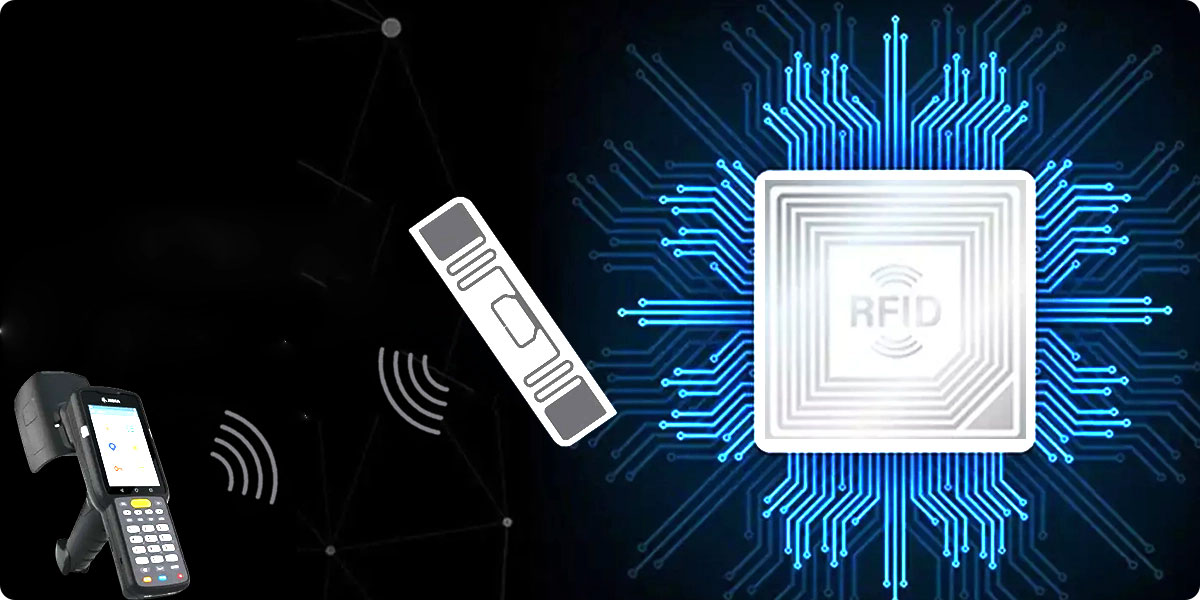
Most large-scale laundry management applications use passive UHF RFID technology. Each tag contains an RFID chip and antenna and receives energy from an RFID reader. When the tag enters the reader's effective range, its unique identification number can be captured automatically.
The RFID tag normally stores a unique identification code, while detailed information such as textile type, owner, customer, washing history, repair status, and current location is managed in the connected database. This approach makes the system easier to maintain and more flexible for future upgrades.
An RFID laundry tracking solution generally consists of four main components: RFID laundry tags, RFID readers, software or middleware, and a laundry management database.
RFID Laundry Tag: Each towel, sheet, uniform, gown, or textile is assigned a unique RFID identity.
RFID Reader: Handheld readers, fixed readers, cabinets, portals, conveyors, or other reading stations capture tag information at selected checkpoints.
Middleware: The system filters duplicate reads and converts RFID signals into meaningful business events.
Management Software: The database connects each RFID ID with information such as textile category, customer, department, washing history, repair records, and current status.
For example, a hotel towel may change from "Clean Inventory" to "Issued," "Used," "Sent to Laundry," "Laundry Received," "Processing," and finally "Returned." Each status can be updated automatically when the textile passes a designated RFID checkpoint.
Hotels handle large quantities of towels, bed sheets, pillowcases, bathrobes, spa textiles, restaurant linens, banquet textiles, and staff uniforms. These items frequently move between guest rooms, housekeeping departments, storage areas, laundry facilities, and external service providers.
Manual inventory counting makes it difficult to determine exactly where textile losses occur. RFID technology creates a digital record for each item and provides better visibility throughout the entire circulation process.
Typical hotel RFID laundry management processes include:
Registering and encoding new textiles.
Receiving clean linen into the hotel storage area.
Issuing textiles to guest rooms, restaurants, spas, or banquet departments.
Collecting used textiles from housekeeping and other departments.
Recording items sent to an internal or external laundry.
Checking returned textiles against outgoing quantities.
Identifying missing, damaged, repaired, or retired items.
With item-level RFID tracking, hotel managers can better understand available linen inventory, identify unexplained shortages, monitor laundry returns, and improve purchasing decisions.
Hospitals and healthcare facilities have particularly demanding textile management requirements. Bed linen, patient gowns, medical uniforms, towels, reusable surgical textiles, curtains, and other reusable items may pass through multiple departments every day.
RFID provides a practical way to improve textile traceability and inventory control. Healthcare organizations can record when textiles are collected, received by the laundry, processed, released as clean inventory, distributed to wards, and returned.
Common healthcare applications include:
Hospital bed linen tracking.
Patient gown management.
Medical staff uniform tracking.
Clean textile inventory monitoring.
Ward-level textile distribution management.
Off-site laundry handover verification.
Repair, inspection, and retirement management.
It is important to understand that RFID tracking does not itself verify whether a textile is hygienically clean. RFID records movement and process checkpoints, while washing procedures, temperature, chemicals, handling processes, and infection-control procedures remain essential for healthcare textile management.
Commercial laundries and textile rental companies often process textiles belonging to multiple customers. Hotels, hospitals, restaurants, factories, and other businesses may send similar-looking towels, uniforms, sheets, and garments to the same laundry facility.
Manual sorting can become difficult when the volume increases. RFID provides each textile with a unique identity, making it easier to separate customer-owned assets and verify quantities throughout the laundry process.
RFID checkpoints can be established at different stages:
Customer Pickup: Record the textiles collected from each customer.
Receiving: Compare received RFID IDs with expected quantities.
Sorting: Automatically identify customer, textile category, and processing requirements.
Washing and Processing: Record textile movement through the production line.
Packing: Verify customer orders before dispatch.
Shipping: Create an accurate digital handover record.
Delivery: Reconcile delivered quantities with customer records.
This can help commercial laundries reduce sorting mistakes, improve customer accountability, simplify shortage investigations, and provide more reliable service records.
Unlike traditional barcode systems that generally require individual scanning, UHF RFID can identify multiple tagged textiles within a suitable reading zone. This can significantly improve the efficiency of cart counting, receiving, inventory checking, packing, and dispatch operations.
RFID provides an item-level record of what was issued, collected, sent to a laundry facility, received, and returned. When a shortage occurs, businesses can use the historical records to identify where the discrepancy may have happened instead of relying only on manual counts.
A traditional inventory system may only show the total number of textiles purchased. RFID can provide a clearer picture of how many items are currently clean, in use, being transported, at the laundry, under repair, or potentially missing.
By connecting RFID identification with software records, businesses can monitor washing cycles, repair history, damage, rejection, and retirement. This information can help identify textile categories that experience higher replacement or repair rates.
For commercial laundry and textile rental companies, RFID records can support customer statements, delivery verification, rental allocation, shortage investigation, and agreed repair or replacement charges.
There is no single RFID laundry tag that is suitable for every textile application. The correct tag should be selected according to the textile material, washing conditions, attachment method, expected service life, reading environment, and application requirements.
Fabric laundry tags are thin, flexible, and suitable for applications where comfort, flexibility, and discreet installation are important. They can be sewn into towels, sheets, uniforms, gowns, and other textile products.
Silicone encapsulation provides flexibility and additional protection. Silicone RFID laundry tags are suitable for textiles that experience repeated washing, drying, folding, and mechanical handling.
PPS RFID tags feature a more rigid construction and can be used for demanding industrial laundry applications where additional mechanical protection is required.
Before mass production, RFID laundry tags should be tested under the actual washing temperature, detergent or disinfectant conditions, drying process, ironing process, pressure, folding method, and expected number of laundry cycles.
Installation quality can have a direct impact on RFID performance and tag durability. Depending on the textile, RFID laundry tags can be sewn into a seam, inserted into a textile pocket, or attached using a qualified heat-sealing process.
The installation position should be standardized for each textile type. Poor placement may result in mechanical stress, discomfort, antenna damage, or inconsistent RFID reading performance.
A tag that performs well when tested individually on a table may behave differently when installed inside wet, folded, compressed, or densely packed textiles. Therefore, final testing should always reproduce the real operating environment.
Different RFID reader configurations can be used according to the laundry workflow and required reading volume.
Handheld RFID Readers: Suitable for inventory checks, pilot projects, exception searches, and smaller operations.
Tabletop or Cabinet Readers: Suitable for controlled counting, issue, return, and packing verification.
Portal Readers: Suitable for carts, loading areas, receiving, dispatch, and laundry handover points.
Conveyor or Tunnel Readers: Designed for high-volume laundry processing and automated production lines.
The objective should not simply be maximum reading distance. A well-designed RFID system should create a controlled reading zone that captures the intended textiles while minimizing unwanted reads from nearby carts, storage areas, or other inventory.
Before investing in a complete RFID laundry management system, it is recommended to establish a baseline using the existing manual process. Businesses can compare current labor hours, textile losses, inventory discrepancies, emergency purchases, repair costs, and customer disputes with the results after RFID implementation.
A simple payback calculation can be expressed as:
Payback Period = Total RFID Implementation Cost ÷ Verified Net Savings
Total project cost should include RFID tags, attachment labor, readers, antennas, installation, software, middleware, system integration, testing, employee training, maintenance, replacement tags, and workflow optimization.
Analyze the existing workflow: Identify textile categories, ownership, handover points, and problem areas.
Establish a baseline: Measure inventory time, textile losses, discrepancies, turnaround time, and labor costs.
Select a pilot category: Start with towels, uniforms, bed sheets, or another high-volume textile.
Test the RFID tag: Evaluate washing, drying, ironing, chemical resistance, attachment strength, and read performance.
Design RFID checkpoints: Install readers at receiving, dispatch, sorting, storage, or other critical process points.
Define the data structure: Establish EPC encoding, item IDs, customer information, status rules, and database relationships.
Run a pilot project: Compare RFID results with physical counts and existing management processes.
Scale after verification: Expand the solution after confirming reliable performance and measurable operational benefits.
Choosing RFID tags before understanding the actual laundry workflow.
Testing tags only under dry and ideal conditions.
Focusing only on maximum reading distance instead of reading accuracy.
Using unsuitable attachment methods.
Ignoring wet, folded, compressed, or densely stacked textiles during testing.
Failing to establish procedures for unread or damaged tags.
Expecting RFID tags to independently verify textile cleanliness.
Storing sensitive customer or personal information directly on the RFID tag.
Choosing the right RFID laundry tag manufacturer is just as important as selecting the right RFID technology. For large hotel groups, hospitals, commercial laundries, textile rental companies, and distributors, a reliable supplier should be able to provide consistent RFID performance, customized tag structures, stable production capacity, and professional OEM/ODM support.
CBT provides customized RFID laundry tag solutions for different textile management applications, including hotels, hospitals, commercial laundries, uniform management, textile rental, and industrial laundry operations.
With professional RFID manufacturing experience, CBT can support customized chip options, tag sizes, materials, printing, encoding, attachment methods, packaging, and large-volume production according to customer requirements.
Factory Direct Supply: Direct manufacturing support helps customers control procurement costs and production schedules.
OEM & ODM Customization: Customized RFID laundry tags can be developed according to textile type and application requirements.
Large-Volume Wholesale: Suitable for commercial laundries, hotel groups, hospitals, distributors, and long-term projects.
China + Thailand Manufacturing: CBT has manufacturing facilities in both China and Thailand, providing customers with more flexible production and supply-chain options.
Potential Tariff Cost Advantage: Production through the Thailand factory can help eligible customers reduce tariff-related costs by up to 50%, depending on the destination market, product classification, and applicable trade policies.
Quality & Performance Testing: RFID laundry tags can be tested under actual washing, drying, folding, and reading conditions before mass production.
Global Bulk Supply: Stable production capacity and export experience support large-volume orders and international delivery.
Whether you need RFID laundry tags for a hotel, hospital, industrial laundry, textile rental business, or large-scale linen management project, CBT can help you select the appropriate RFID chip, material, size, attachment method, and encoding solution.
For an accurate quotation and sample evaluation, please provide your textile type, application, washing temperature, chemical conditions, drying and ironing process, attachment method, RFID frequency, expected quantity, reader environment, and required encoding format.
Contact CBT today for RFID laundry tag samples, OEM/ODM customization, and bulk wholesale solutions. With manufacturing facilities in both China and Thailand, CBT can provide flexible production options, help reduce supply-chain and tariff-related costs, and support large-volume RFID laundry projects worldwide.